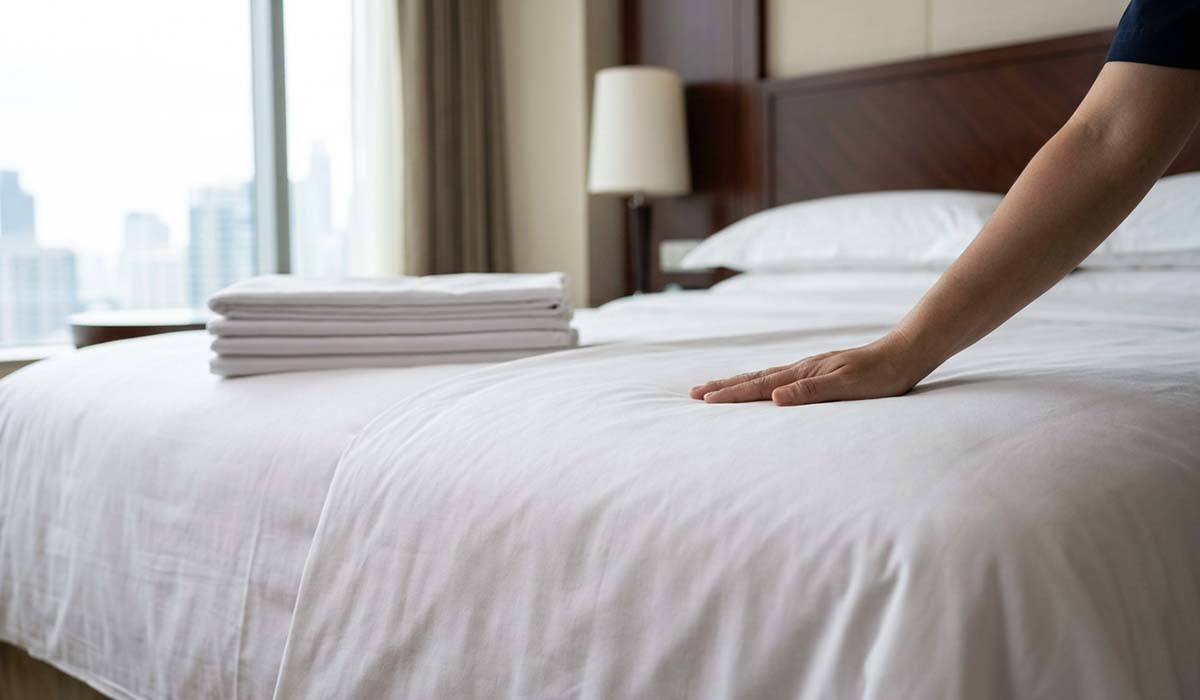
When choosing bed sheets for your hotel, the material you select can significantly impact your guests’ comfort and satisfaction. Two of the most popular options are cotton and microfiber sheets. Both offer unique benefits, but they also come with distinct drawbacks. So, how do you decide which material is the best for your hotel beds?
In this blog, we will break down the key differences between cotton vs. microfiber sheets, helping you make an informed choice that aligns with your hotel’s goals.
When choosing the right sheets for your hotel, consider options like our Ryotei T 300 Luxurious combed cotton sheets, which balance luxury, comfort, and durability.
Table of Contents
Cotton vs. Microfiber Sheets: Key Differences
Here’s a quick comparison of the key differences between cotton and microfiber sheets:
|
Feature |
Cotton Sheets |
Microfiber Sheets |
| Breathability | Highly breathable, ideal for hot sleepers | Less breathable and may trap heat |
| Durability | Long-lasting, especially with high thread count | Durable but prone to pilling |
| Comfort | Luxurious, soft feel | Soft, but less luxurious than cotton |
| Cost | More expensive, especially premium types | Budget-friendly and affordable |
| Maintenance | Prone to wrinkling, longer drying time | Wrinkle-resistant, easy to care for |
| Best Use | Luxury hotels, warm climates | Budget hotels or cold climates |
1. Understanding Cotton Sheets

Cotton is a natural fiber that has been a staple in bedding for centuries. Known for its luxurious feel and breathability, cotton sheets are commonly found in high-end hotels worldwide. Here’s why:
Pros of Cotton Sheets
- Breathability: Cotton sheets are naturally breathable, making them ideal for warmer climates or guests who prefer a cooler sleep environment.
- Durability: With proper care, cotton sheets last longer than most synthetic fibers. Higher thread counts, such as Egyptian cotton or Pima cotton, offer even more strength and softness.
- Luxury Feel: Cotton has a soft, crisp feel that’s highly sought after for luxury hotels. Its smooth texture enhances the overall guest experience.
What Are the Cons of Cotton Sheets?
- Wrinkles: One common issue with cotton sheets is that they tend to wrinkle easily, resulting in extra time spent on ironing or steaming.
- Higher Cost: While cotton sheets tend to last longer, they generally come with a higher price tag, especially for premium varieties like Egyptian cotton.
- Longer Drying Time: Compared to microfiber, cotton takes longer to dry after washing, which could be an issue in busy hotel laundries.
For hotels that prioritize luxurious comfort, our Icon Premio 300 Sheets, made from high-quality cotton, are perfect. Designed to withstand frequent laundering while providing guests with a soft, crisp feel, these sheets embody the finest qualities of Egyptian cotton.
Explore Our Exquisite Range of Cotton Sheets for Ultimate Comfort & Luxury
Indulge in the softness and breathability that only premium cotton can provide.
2. Understanding Microfiber Sheets

Microfiber sheets are made from finely woven synthetic fibers, typically a blend of polyester and polyamide. These sheets are known for being more affordable and often touted for their low-maintenance properties.
Pros of Microfiber Sheets
- Affordability: Microfiber sheets are generally more budget-friendly than cotton, making them a popular choice for hotels looking to save on bedding costs.
- Wrinkle-Resistant: Microfiber sheets resist wrinkles, reducing the time spent on ironing and improving the overall hotel turnaround time.
- Moisture Wicking: Microfiber’s moisture-wicking properties can help keep guests comfortable by absorbing sweat and moisture during the night.
What Are The Cons Of Microfiber Sheets?
- Less Breathable: Microfiber sheets are less breathable compared to cotton, which may lead to discomfort in hotter climates or for guests who sleep warm.
- Pilling: Over time, microfiber can develop pilling (small, rough patches), which can affect the sheets’ appearance and feel.
- Synthetic Feel: While soft, microfiber lacks the luxurious feel that cotton provides. Some guests may prefer the natural texture of cotton over synthetic fabrics.
If you’re looking for a cost-effective, wrinkle-resistant option, consider our Microfiber Luxury Sheets. With a smooth finish and easy-care properties, they’re an excellent choice for hotels that want to balance comfort with budget.
Experience A 50% Reduction in Drying Time With Our Opal Fast Drying Microfiber Sheet!
Cotton vs. Microfiber Sheets: What’s the Best Choice for Hotels and Homes?
The right bed sheets can significantly improve your sleeping experience—or your guest satisfaction if you run a hotel. Among the most popular choices are cotton and microfiber sheets. Each material has its own pros and cons depending on what you value most—comfort, durability, breathability, or affordability.
1. Comfort & Feel: Which Sheets Feel Better?
Cotton sheets are a favorite for their crisp, cool, and breathable feel. Over time, they soften with each wash while staying gentle on the skin. Higher thread count cotton sheets—typically between 300 and 600—feel smoother and more luxurious.
Microfiber sheets, made from finely woven synthetic fibers, have a silky and smooth texture. They feel warmer and are great for cooler climates. However, microfiber tends to trap heat, which might not be ideal for hot sleepers or summer nights.
If your guests or family members sweat during sleep, cotton sheets are the better option. Cotton absorbs moisture and helps it evaporate gradually, keeping the bed fresh and dry.
2. Breathability & Moisture Control
When it comes to staying cool at night, cotton sheets win. Their natural breathability helps regulate body temperature and wick away sweat, making them a popular choice for warmer climates and hospitality environments.
Microfiber, on the other hand, has lower absorbency. Moisture tends to sit on the surface, and if it collects under the body, it can lead to a damp, sticky feeling.
Best for Hot Sleepers: Cotton
Best for Cold Climates: Microfiber
3. Durability & Longevity
High-quality cotton sheets—especially those made from combed cotton or long-staple fibers—can last for years with proper care. They resist pilling and get softer over time, not weaker.
Microfiber sheets are also strong and resistant to wrinkling. A flat weave microfiber sheet holds up well to frequent washes, which makes it a decent budget-friendly option for short-term use or backup sets.
However, microfiber with a waffle or textured weave may wear out faster, absorb stains more easily, and show signs of wear sooner than cotton.
4. Maintenance & Cleaning
Both cotton and microfiber sheets are easy to maintain and typically machine washable. Cotton handles higher wash temperatures better, which is important in hospitality settings for hygiene and stain removal.
Microfiber should be washed on lower heat settings and may become static-prone after drying. Stains can also set more easily in microfiber, especially textured weaves.
For white sheets, cotton again has the upper hand. It’s easier to bleach and restore, while microfiber may permanently stain or yellow over time.
5. Affordability: What’s the Better Value?
Microfiber sheets are generally more budget-friendly, making them a popular choice for cost-conscious buyers. However, they may need to be replaced more frequently if used daily.
Cotton sheets cost more upfront, but their longevity and comfort often make them a better long-term investment—especially in hotels where guest experience matters.
6. Environmental Impact: Natural vs. Synthetic
If sustainability is important to you, cotton is the more eco-friendly option. It’s a natural fiber, biodegradable, and typically requires fewer chemicals in production.
That said, not all cotton is created equal. Cheaper cotton may be treated with chemicals or produced using unsustainable practices. Look for certifications like GOTS (Global Organic Textile Standard) for truly organic cotton sheets.
Microfiber, being synthetic, is derived from petroleum-based materials. It doesn’t break down easily and may release microplastics into the water during washing.
Do Hotels Use Cotton Or Microfiber Sheets?
Hotels typically use cotton sheets because they are soft, breathable, and durable, offering a luxurious guest experience. However, some hotels may also use microfiber sheets for their affordability, easy maintenance, and resistance to wrinkles.
For Luxury Hotels
Cotton sheets, especially those with a high thread count like Egyptian cotton or Pima cotton, offer the luxury and comfort expected by high-end guests. Bed sheets like Ryotei T-300 provide superior breathability and softness, making them a go-to for hotels that want to enhance the guest experience. These sheets are a long-term investment due to their durability and luxurious feel.
For Budget Hotels
Microfiber sheets are an excellent choice for budget hotels or large chains that need to maintain a balance between cost and comfort. Their affordability, wrinkle resistance, and moisture-wicking properties make them practical for busy hotels with high turnover.
Enjoy the Best of Both Worlds with the Softness of Cotton and the Resilience of Polyester
Forte T-250 Satin Sheets are crafted from a premium blend of 60% cotton and 40% polyester—striking the perfect balance between comfort and durability for long-lasting hospitality use.
Conclusion: The Right Sheets for Your Hotel
When choosing the best sheets for your hotel, consider your guests’ needs, climate, and budget. Cotton sheets are a great choice for luxury, comfort, and longevity, while microfiber sheets offer affordability and easy care for budget-conscious hotels.
Here’s a summary of the key points:
- Cotton sheets provide superior comfort, breathability, and durability but come at a higher price.
- Microfiber sheets are affordable, easy to care for, and ideal for hotels aiming to save on bedding costs.
- Choose cotton for luxury properties and warmer climates, microfiber for budget-conscious hotels or cooler regions.
By carefully evaluating your hotel’s needs, you can make the best decision and provide a sleeping experience that ensures your guests are comfortable and happy, leading to better reviews and repeat bookings.
Ready to upgrade your hotel’s bedding? Explore our extensive collection of premium cotton and microfiber sheets designed for hotels of all types.
FAQs
1. What’s the main difference between cotton and microfiber sheets?
The main difference lies in the material. Cotton sheets are made from natural fibers, offering a breathable, soft, and luxurious feel, while microfiber sheets are made from synthetic polyester, known for being smooth, durable, and resistant to wrinkles, but less breathable than cotton.
2. What’s the Best Thread Count for Cotton Sheets?
Thread count simply means how many threads are woven into one square inch of fabric. For cotton sheets, a thread count between 200 and 600 is usually ideal. Sheets in this range feel soft, smooth, and are quite durable.
Some brands advertise super high thread counts, like 800 or even 1000, to make their sheets seem more luxurious. But many of those are made with thin, low-quality cotton threads layered together. So, more doesn’t always mean better. In fact, a genuine 300–600 thread count sheet made from good cotton often feels better and lasts longer than those inflated ones.
3. Are microfiber sheets good for hot sleepers?
Microfiber sheets tend to trap heat and do not allow air to pass through as easily as cotton, which makes them less ideal for hot sleepers. Cotton sheets, on the other hand, are breathable and help regulate temperature, making them a better option for those who get hot at night.
4. Do microfiber sheets shrink after washing?
Microfiber sheets generally do not shrink because they are made of synthetic fibers. Cotton sheets, however, have a tendency to shrink after washing, especially if they’re not washed according to care instructions.
5. Which sheets last longer, cotton or microfiber?
Cotton sheets, especially high-quality ones like Egyptian or Pima cotton, tend to last longer and improve with age. Microfiber sheets are more affordable but tend to wear out faster and lose their softness over time.
6. How Often Should You Replace Your Bed Sheets?
It’s a good idea to replace your sheets every 2 to 3 years, especially if you use the same set regularly. If you take care of them—washing gently and rotating between sets—they might last up to 5 years.
As long as your sheets still feel soft, smell clean, and don’t have holes or pilling, you can keep using them. But if they feel rough or look worn out, it might be time for a new set.
7. Are microfiber sheets safe for people with allergies?
Microfiber sheets can be a good option for people with allergies as they are tightly woven and prevent dust mites and other allergens from penetrating the fabric. However, cotton is also a hypoallergenic option, especially if you go for organic or high-quality cotton.