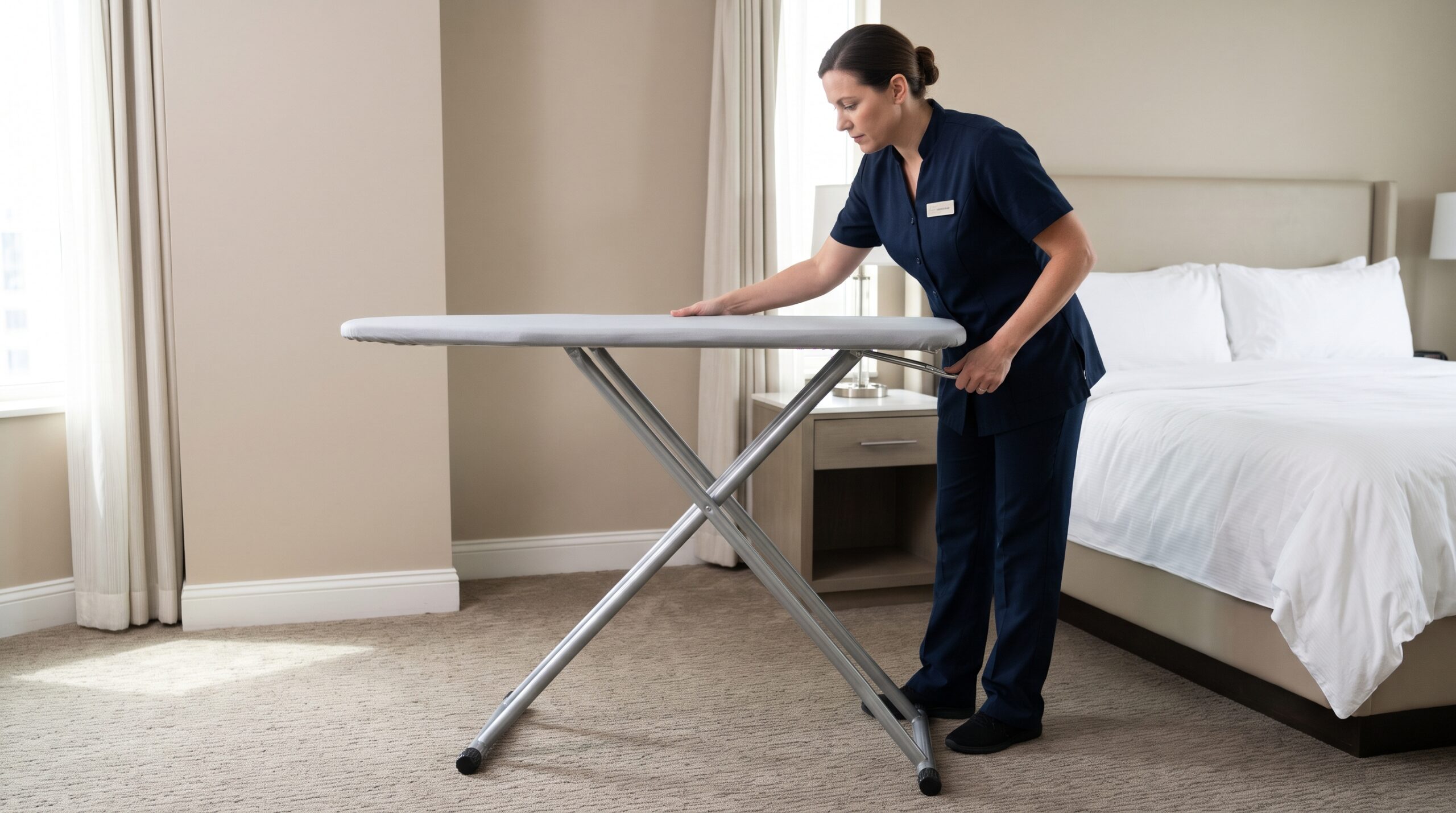
Closing an ironing board should be simple, but a stubborn release lever or unfamiliar folding mechanism can make the task frustrating. Whether you’re a hotel housekeeper preparing a guest room, a hotel guest, or someone ironing at home, knowing how to fold an ironing board correctly helps prevent injuries, equipment damage, and storage problems.
To close a standard ironing board, locate the release lever underneath the ironing surface, hold the board securely, and press or lift the lever to unlock the legs. Slowly lower the board until the support frame folds flat against its underside. Keep your fingers away from the moving hinges, and secure the board before storing it.
The exact process depends on the ironing board’s design. This guide explains how to close common ironing board types, what to do when a board won’t fold, and how hotel housekeeping teams can store ironing boards safely.
Table of Contents
How to Close a Standard Ironing Board in 5 Easy Steps
Most freestanding ironing boards use a release lever or locking mechanism to hold the board at the desired height. When released, the supporting legs collapse toward the underside of the ironing surface.
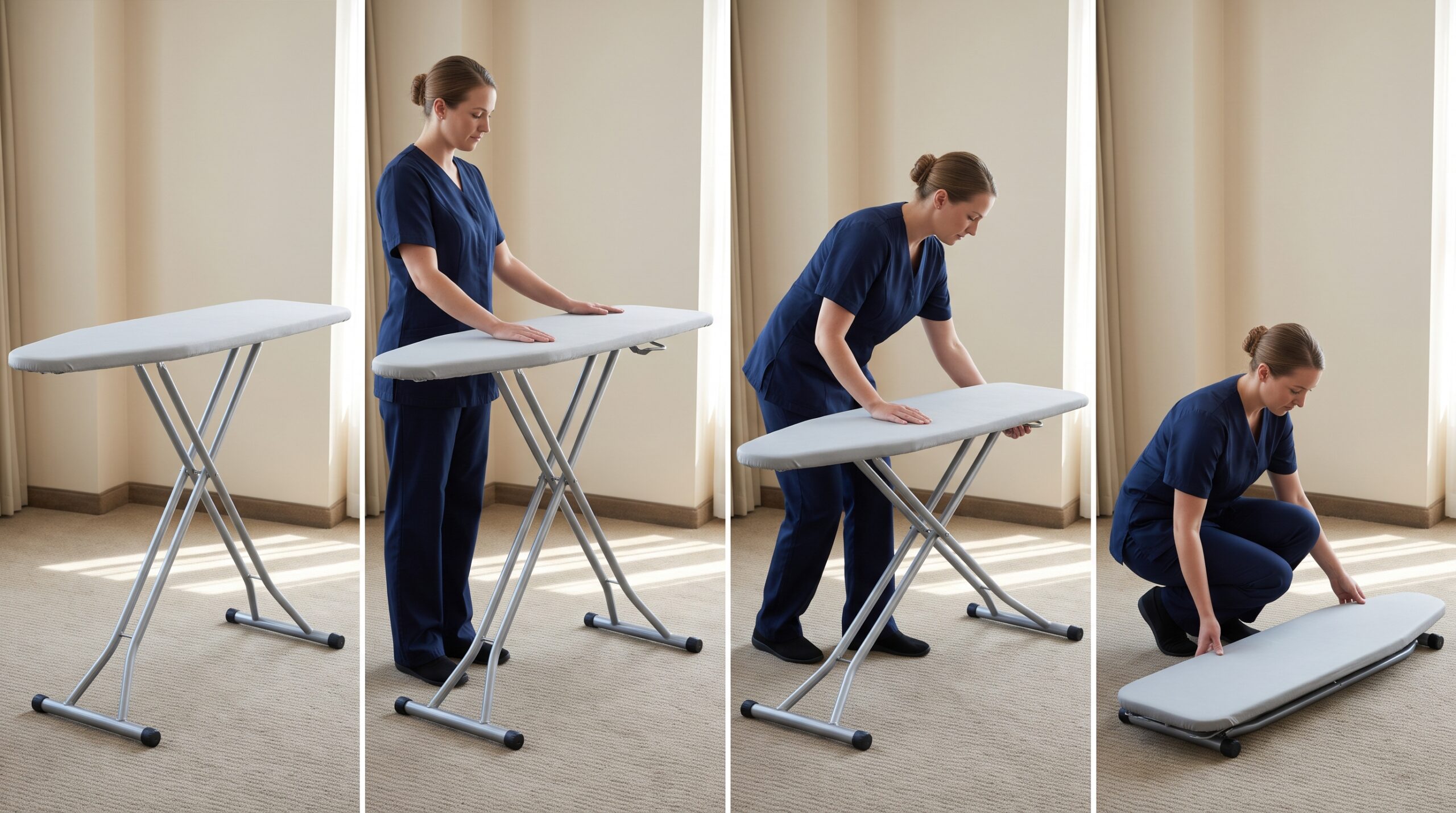
Follow these five steps to fold a standard ironing board safely.
Step 1: Remove the Iron and Clear the Area
Before touching the folding mechanism, unplug the iron and place it on a stable, heat-resistant surface to cool.
Remove clothing, hangers, and other items from the ironing board.
Make sure there’s enough room to lower the board without hitting furniture or nearby objects.
Hotel housekeeping tip: Before folding an ironing board in a guest room, check that the iron has been unplugged and that its cord is clear of the folding mechanism. Never store a hot iron against an ironing board cover.
Step 2: Locate the Release Lever
Look underneath the ironing board, usually near the wider end or along the supporting frame.
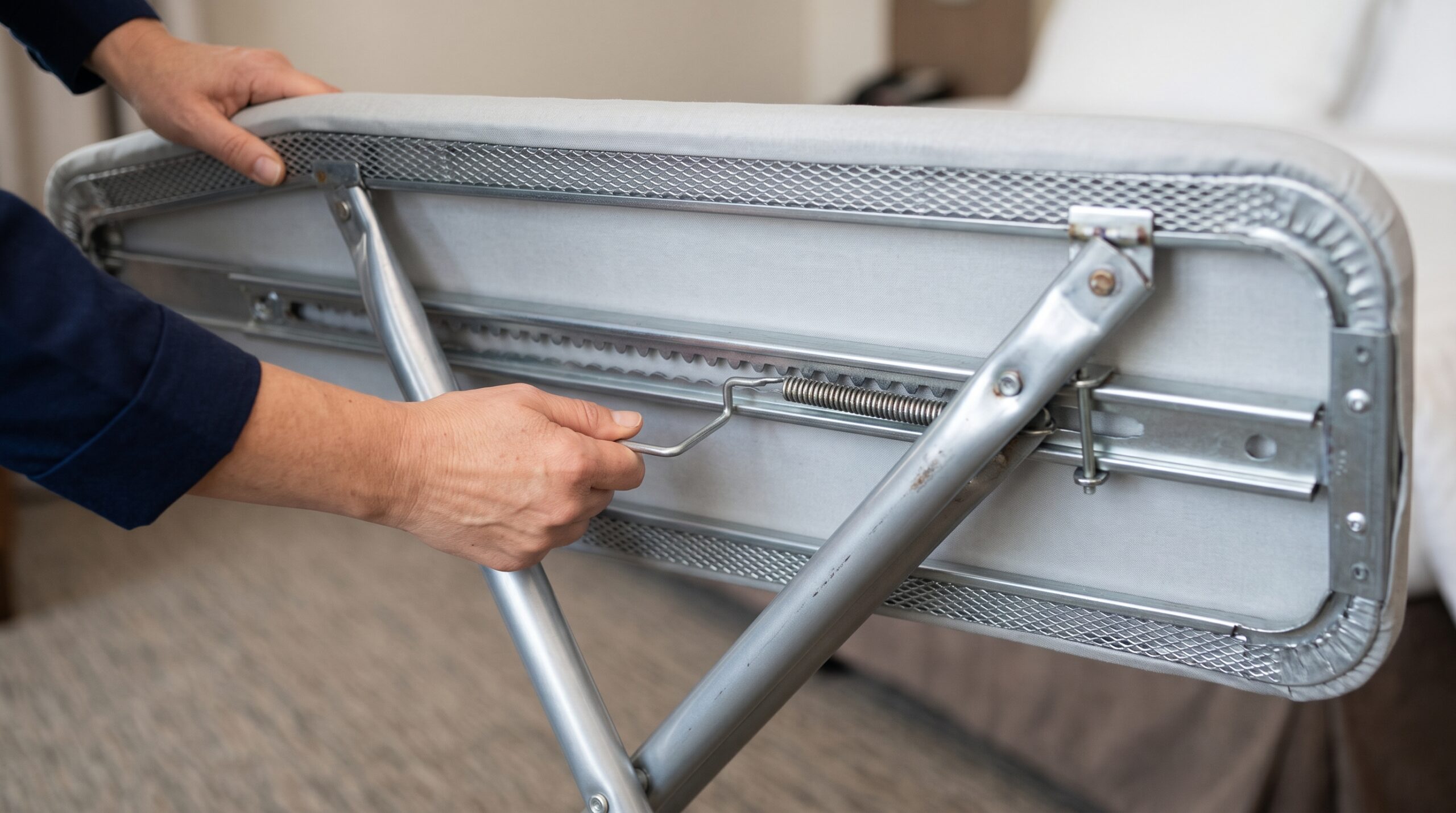
Depending on the model, you may find:
- A metal release lever
- A plastic release handle
- A spring-loaded locking mechanism
- A height-adjustment control that also releases the folding frame
Some boards have a lever that must be pressed upward, while others require pulling or squeezing.
If you cannot locate the release mechanism, check the manufacturer’s instructions rather than forcing the frame.
Step 3: Unlock the Folding Mechanism
Hold the ironing surface securely with one hand.
With your other hand, operate the release lever according to the board’s design.
You may need to slightly support or lift the ironing surface to reduce pressure on the locking mechanism.
Once the lock disengages, the supporting frame should be able to move.
Safety reminder: Keep your fingers away from hinges, sliding supports, and other moving parts. Some ironing boards can lower suddenly when the lock is released.
Step 4: Slowly Fold the Ironing Board Legs
While supporting the ironing surface, gradually lower the board.
On a typical freestanding ironing board, the connected leg assembly collapses toward the underside of the board.
You generally do not need to fold each leg separately.
Continue lowering the board until the legs are fully collapsed and positioned flat against the underside.
If the mechanism becomes stuck, stop and check for obstructions. Avoid pushing or bending the legs with excessive force.
Step 5: Secure and Store the Ironing Board
Once the legs are fully folded, check whether your ironing board has a storage latch or locking clip.
If present, engage it to prevent the legs from opening unexpectedly.
Store the board in a suitable location, such as a designated ironing board holder, closet, or storage cabinet.
For hotel guestrooms, make sure the folded board is stable, doesn’t block access to room amenities, and cannot easily fall onto guests or housekeeping staff.
Where Is the Release Lever on an Ironing Board?
One of the most common reasons people struggle to close an ironing board is that they cannot find its release lever.
On many freestanding ironing boards, the release lever is located underneath the ironing surface and connected to the height-adjustment mechanism.
Its exact position varies by manufacturer.
How to find it:
First, stand beside the ironing board and look underneath the wider section of the ironing surface.
Check for a metal or plastic handle connected to the frame.
If no obvious handle is visible, examine the support mechanism for a spring-loaded control.
Do not confuse fixed support braces with release handles. Pulling or forcing the wrong component could damage the board.
Some compact ironing boards use a completely different folding system and may not have a conventional release lever.
Recommended visual: Include a close-up photograph of an actual ironing board with the release lever clearly labeled. This can help readers identify the mechanism more quickly.
How to Close Different Types of Ironing Boards
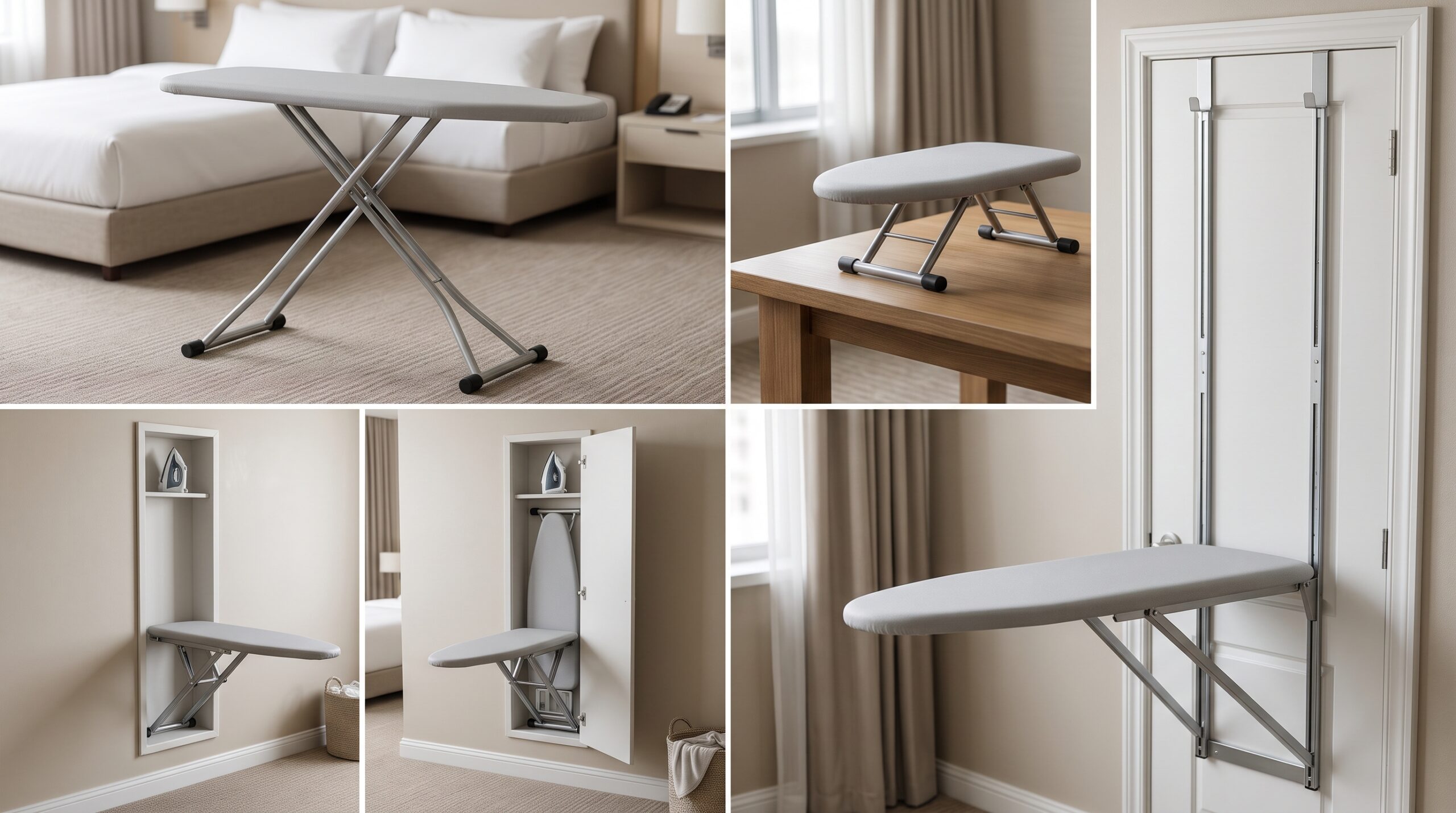
Not all ironing boards close the same way. Understanding your board’s design can help you avoid damaging its folding mechanism.
1. Standard Freestanding Ironing Board
Standard freestanding ironing boards are commonly used in homes and hotel guestrooms.
They typically feature an adjustable-height ironing surface supported by folding legs.
To close one, locate the release mechanism, support the ironing surface, and gradually collapse the frame.
The ironing surface itself usually remains rigid.
2. Tabletop Ironing Board
Tabletop ironing boards are compact models designed to sit on a table or another stable surface.
They generally have short folding legs.
To close a tabletop ironing board:
Place it on a stable surface and ensure the iron has been removed.
Turn or position the board as instructed by the manufacturer to access the folding supports.
Release any locking clips, then fold the legs against the underside of the board.
Some tabletop models use independently folding legs, while others have connected supports.
3. Wall-Mounted Ironing Board
Wall-mounted ironing boards are designed to save floor space.
They are attached to a wall or installed inside a cabinet.
To close one, remove the iron and release the board’s locking mechanism if applicable.
Carefully raise or retract the ironing surface into its designated storage position.
Secure the cabinet door or retaining latch where provided.
Do not attempt to force a wall-mounted ironing board into its enclosure if the hinges or support arms are misaligned.
4. Over-the-Door Ironing Board
Over-the-door ironing boards hang from a door and can fold upward when not in use.
To close this type, remove the iron, release any support lock, and carefully lift the ironing surface toward the door.
Secure the board using its built-in retaining mechanism.
Before leaving the room, check that the folded board doesn’t interfere with the door’s normal operation.
5. Built-In or Drawer Ironing Board
Some compact rooms and specialized storage systems feature ironing boards that slide out from a cabinet or drawer.
These may use sliding tracks, folding support arms, or rotating mechanisms.
Follow the manufacturer’s instructions to return the board to its storage position.
Never push a built-in ironing board into its cabinet while its support mechanism remains locked in the open position.
Why Won’t My Ironing Board Close?
An ironing board that refuses to fold doesn’t necessarily need replacing.
In many cases, the problem involves the release mechanism, an obstruction, or incorrect operation.
However, damaged components can create safety risks.
The Release Lever Is Stuck
A release lever may become difficult to operate because of accumulated debris, mechanical wear, or pressure on the locking mechanism.
What to do: Support the ironing surface and try operating the lever gently according to the manufacturer’s instructions.
Check for visible debris around the release mechanism.
Avoid applying excessive force or using tools to pry the lock open.
If the mechanism remains stuck, discontinue use until it has been inspected.
The Legs Won’t Fold
If the release lever moves but the legs remain extended, the locking mechanism may not have fully disengaged.
There may also be an obstruction in the support frame.
What to do: Check that clothing, electrical cords, and nearby objects aren’t interfering with the frame.
Confirm that you’re using the correct release control.
If the legs still won’t move, don’t force them.
The Ironing Board Folds Unevenly
Uneven folding can indicate a bent support frame, loose hardware, or damaged hinges.
What to do: Inspect the frame for visible damage.
If the board appears bent or unstable, remove it from service.
Hotel housekeeping staff should report damaged ironing boards to maintenance rather than attempting unauthorized repairs.
The Ironing Board Won’t Stay Folded
Some ironing boards have storage clips or latches that hold the collapsed legs in place.
If these are damaged or not properly engaged, the board may open unexpectedly.
What to do: Check the storage latch if your model includes one.
Do not rely on a damaged latch to secure a vertically stored ironing board.
Use an appropriate storage holder or remove the equipment from service until the issue is resolved.
How to Close an Ironing Board Without a Release Lever
Not every ironing board has a visible release lever.
Some tabletop and compact models use folding clips, locking bars, or other mechanisms.
If your ironing board doesn’t have an obvious lever, identify its model and examine the manufacturer’s folding instructions.
Look for a release clip or control connected to the supporting frame.
Do not assume that pushing the legs together will close the board.
Important: If the board’s locking mechanism is missing, broken, or cannot be identified, avoid forcing it closed.
A damaged locking mechanism can also affect the board’s stability during ironing.
How to Store an Ironing Board Safely in Hotel Guest Rooms
For hotels, closing an ironing board is only part of the process.
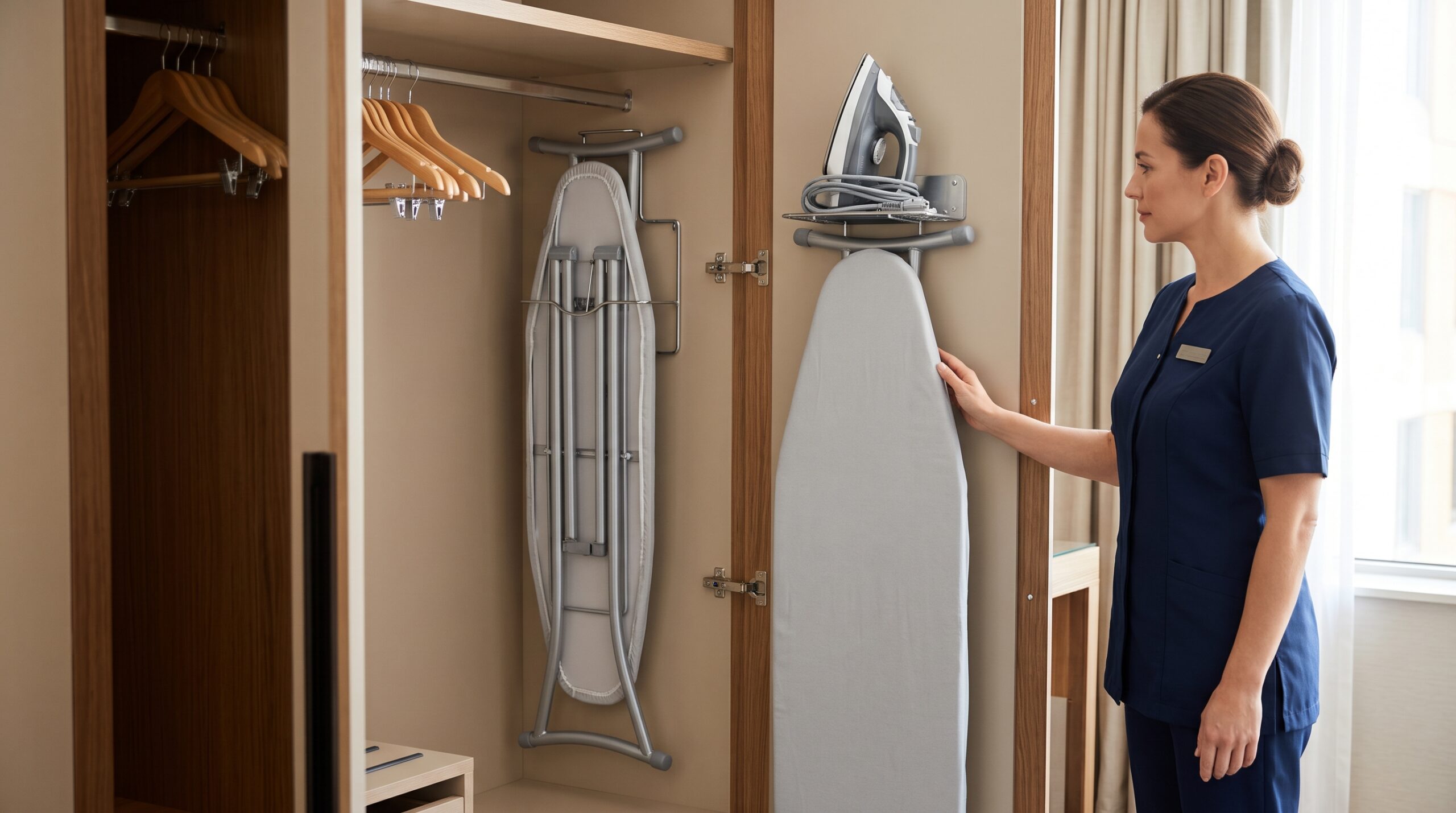
Proper storage helps protect equipment, maintain organized guest rooms, and reduce avoidable safety hazards.
Use a Designated Storage Location
Whenever possible, store ironing boards in a designated closet or ironing board holder.
A suitable holder should support the board securely and prevent it from falling.
Avoid leaving folded boards leaning loosely against furniture.
Keep the Iron and Board Secure
Ironing equipment should be stored according to the manufacturer’s instructions.
Allow the iron to cool completely before placing it in an enclosed storage area.
Keep electrical cords organized so they cannot become tangled in the ironing board’s legs.
Inspect the Folding Mechanism Regularly
Hotel ironing boards may be handled frequently by guests and housekeeping teams.
Routine inspections should check for loose supports, damaged feet, unstable frames, and faulty release mechanisms.
An ironing board that doesn’t lock securely when opened should be removed from guest use.
Train Housekeeping Staff
Housekeeping teams should understand how to operate the specific ironing board models used at their property.
Training should cover safe folding, storage procedures, equipment inspections, and damage reporting.
Using the same model across guestrooms, where practical, can also simplify staff training and replacement-part management.
Equip Your Hotel for a Better Guest Experience
From guestroom essentials to everyday housekeeping supplies,
DZEE Textiles helps hospitality businesses find practical
solutions for comfortable rooms and efficient operations.
Common Ironing Board Mistakes to Avoid
Closing an ironing board incorrectly can damage the equipment or cause injuries.
One common mistake is forcing the legs closed without releasing the locking mechanism. This can bend the frame or damage the height-adjustment system.
Another is placing fingers near moving hinges while lowering the board.
People also sometimes attempt to fold the board while the iron is still resting on its surface.
For hotels, storing an ironing board with a damaged latch or unstable frame creates an additional concern because guests may handle the equipment without knowing it is defective.
The safest approach is to operate the intended release mechanism, support the board throughout the folding process, and stop if anything feels damaged or obstructed.
How Hotel Housekeeping Teams Can Extend Ironing Board Lifespan
Frequent use, improper storage, and rough handling can shorten an ironing board’s service life.
Hotel housekeeping managers can reduce unnecessary equipment replacements by establishing consistent handling procedures.
Start with routine inspections of the legs, hinges, release mechanisms, and ironing surfaces.
Check that the board remains stable when fully opened and that its locking mechanism operates correctly.
Replace worn or damaged ironing board covers when necessary, and follow the manufacturer’s cleaning instructions.
Keep the board dry before storage to help minimize moisture-related damage.
Most importantly, encourage housekeeping staff to report faulty equipment promptly.
For hotel purchasing managers: When selecting replacement ironing boards, consider stability, folding-mechanism durability, storage dimensions, ease of operation, and compatibility with existing guestroom storage arrangements.
The lowest purchase price may not represent the best long-term value if a board requires frequent replacement.
Frequently Asked Questions
How do you close an ironing board with a metal lever?
Locate the metal release lever underneath the ironing surface. Hold the board securely, operate the lever according to its design, and slowly lower the board until the legs collapse. Keep your fingers away from the moving frame.
Why is my ironing board stuck open?
Your ironing board may be stuck because the release mechanism hasn’t fully disengaged, an object is obstructing the frame, or a component is damaged. Check the mechanism carefully and avoid forcing the legs closed.
Do all ironing boards have a release lever?
No. Many standard freestanding ironing boards use release levers, but some compact, tabletop, wall-mounted, and built-in models have different locking systems.
Can I fold an ironing board while the iron is still hot?
Remove the iron before folding the board. Unplug it and allow it to cool in a safe, heat-resistant location. Never fold the board with a hot iron resting on its surface.
How do hotels store ironing boards?
Hotels commonly store ironing boards in guestroom closets, designated holders, or other appropriate storage compartments. The storage method depends on the board’s dimensions, design, and the property’s room layout.
What should I do if my ironing board lever is broken?
Stop using the board if the broken lever affects its locking mechanism or stability. Check the manufacturer’s repair or replacement guidance. Hotel staff should report defective boards to maintenance and remove unsafe equipment from guest use.
Can an ironing board be stored vertically?
Yes, many ironing boards can be stored vertically when fully collapsed and properly secured. However, the board should be supported by a suitable holder or storage system to prevent accidental falls. Follow the manufacturer’s storage recommendations.
Final Thoughts
Learning how to close an ironing board becomes easier once you understand its locking mechanism. For most standard models, the process involves removing the iron, locating the release lever, unlocking the frame, and slowly lowering the board until its legs fold flat.
Different ironing board designs may require different steps, so always follow the manufacturer’s instructions when operating an unfamiliar model.
For hotel housekeeping teams, proper folding and storage are also part of maintaining safe, organized guestrooms. Regular equipment inspections, careful handling, and prompt replacement of damaged ironing boards can help keep guestroom ironing facilities ready for use.