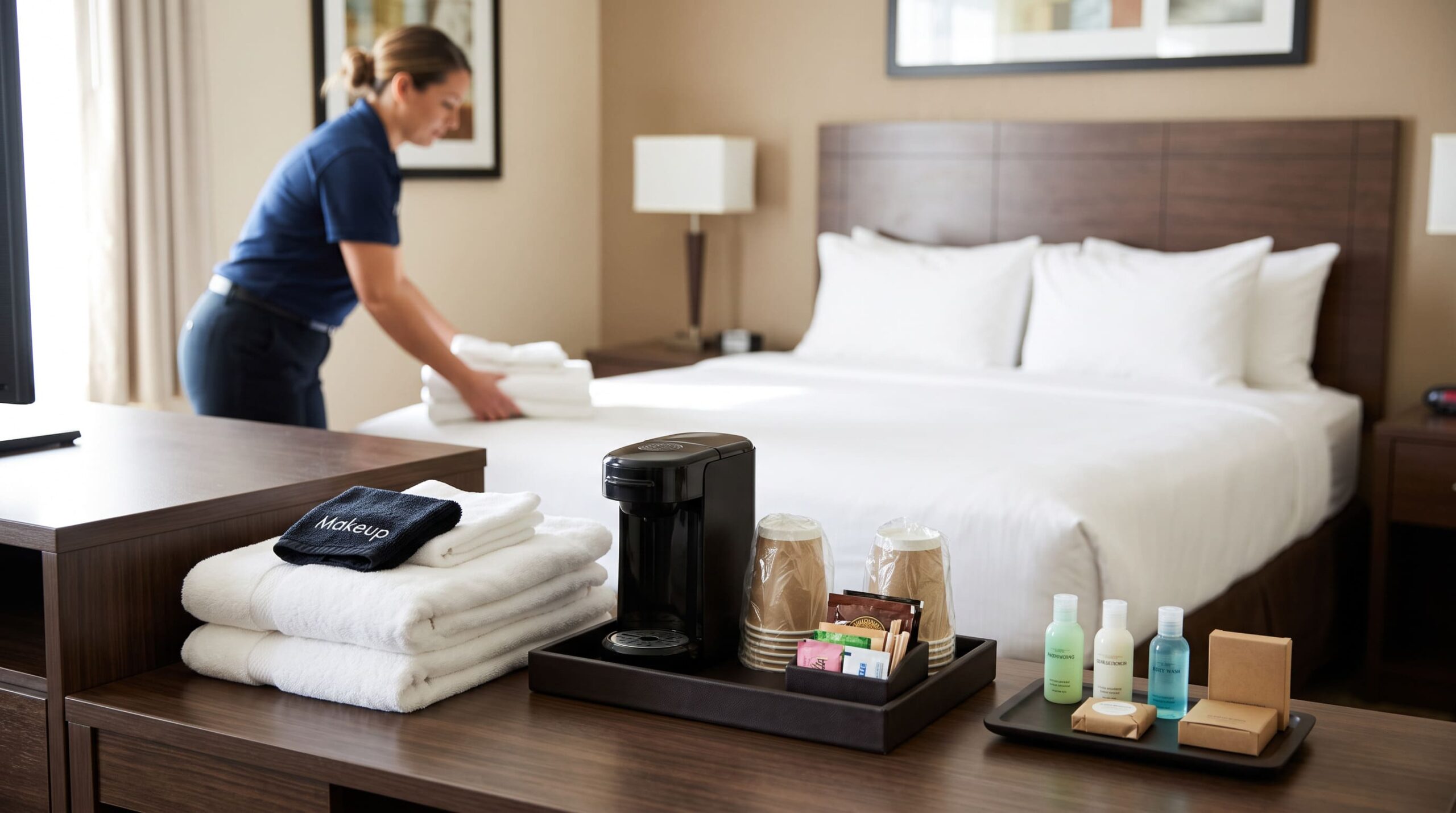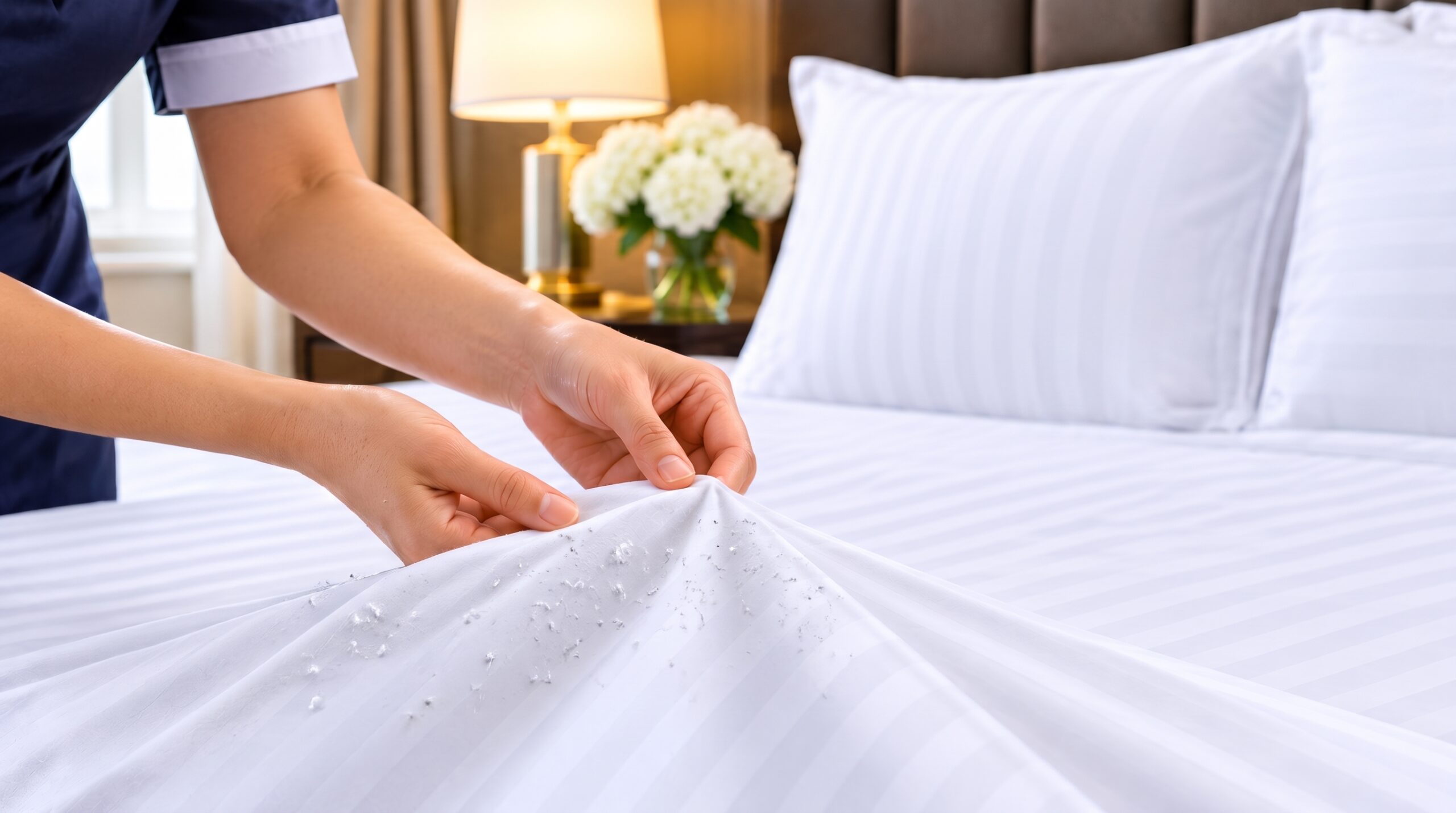
Reducing pilling in hotel bed sheets requires high-quality fabrics (combed/long-staple cotton or polycotton blends), proper laundry care (correct loads, controlled temperatures, proper chemistry, and avoiding over-drying), and efficient inventory management (rotation, inspection, and timely retirement). Pilling results from fabric quality, friction, and laundering methods combined.
Rough, pilled sheets damage guest satisfaction and lead to negative reviews, while forcing early replacements that raise operating costs.
This guide covers why sheets pill, five strategies to minimize it, and commercial purchasing best practices.
Table of Contents
Prevent Pilling in Hotel Sheets
| Ways to reduce pilling | What it controls |
| Choose better fiber and yarn | Fibers breaking and working loose |
| Match weave and construction to your laundry reality | How well the fabric resists surface abrasion |
| Tune the wash formula and load | Chemical and mechanical damage |
| Control drying, ironing and finishing | Heat and friction stress on fibers |
| Run a disciplined linen program | Wear distribution, early detection, retirement timing |
What is Pilling, and Why Do Hotel Sheets Pill?
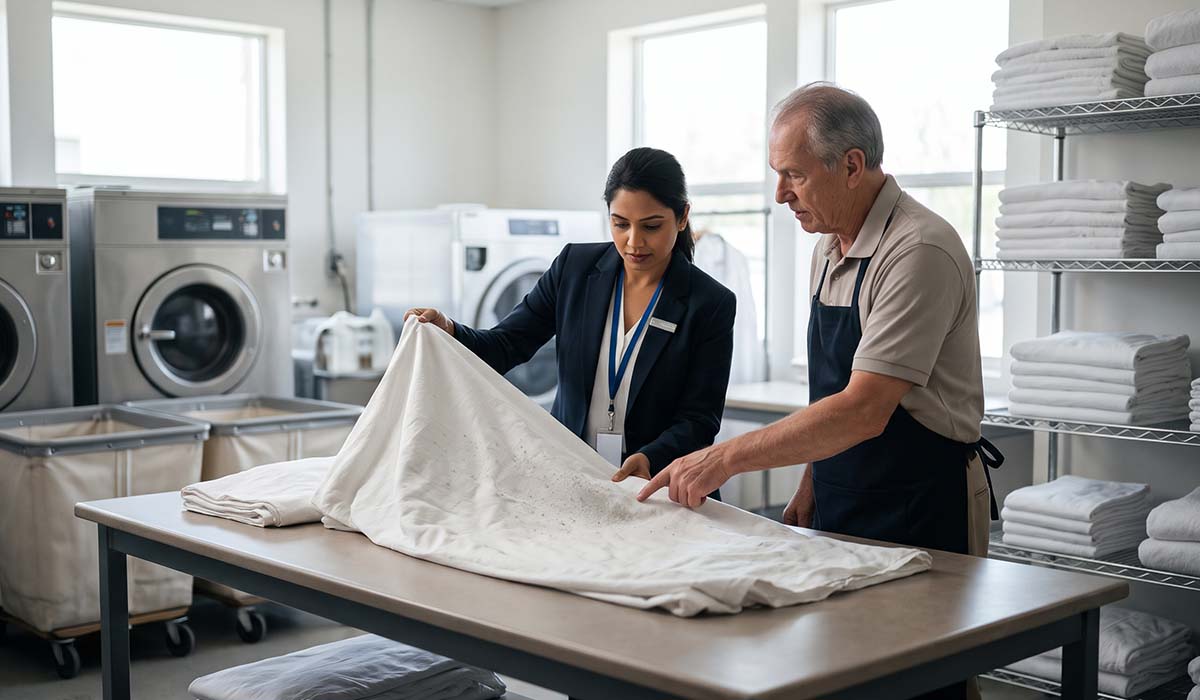
Pilling is the formation of small fiber balls on the surface of a fabric. It happens when loose fiber ends rise to the surface, tangle together through friction, and form small knots that stay attached to the sheet.
Three things have to happen:
- Fibers loosen. Short fibers or broken fiber ends work their way out of the yarn.
- Friction tangles them. Rubbing against a mattress, a guest’s body, other linens, washer drums, or dryer walls rolls those fibers into balls.
- The balls stay put. In cotton, many pills break off over time. In synthetic and blended fabrics, polyester fibers are strong, so pills often hold on to the surface longer and become more visible.
Hotel sheets face this at a scale households never see. A sheet in a busy property may be laundered far more often than a home sheet, which means far more cycles of mechanical action, heat, and chemistry. That is why a fabric that feels fine in a home setting can pill quickly in a hotel.
Is pilling a sign of low-quality sheets? Often, but not always. Low-quality yarn is a common cause, but a good sheet can also pill early when laundry practices are harsh. Diagnosing which one you have is the first step (see the troubleshooting table below).
Option 1: Choose Better Fiber and Yarn
The most reliable way to reduce pilling is to start with fiber that is less likely to shed. Pilling begins at the yarn level, so this is the highest-leverage decision a purchasing team makes.
- Fiber length. Longer cotton fibers (long-staple) have fewer fiber ends poking out of the yarn, so there is less loose material to form pills.
- Combed yarn. Combing is a spinning process that removes shorter fibers and aligns the rest. The result is a smoother, stronger yarn that typically pills less than carded yarn. Ask suppliers whether a given sheet uses combed yarn.
- Yarn consistency. Uneven or loosely twisted yarn sheds more fiber. You can’t easily judge this from a spec sheet, so evaluate a physical sample after repeated washing.
- Blend ratio and polyester type. Cotton/polyester blends are popular in hospitality because they resist wrinkling, dry faster, and tend to last through many wash cycles. But the polyester content can make pills that do form cling to the fabric. Quality of the polyester and the blend ratio both matter, so ask for the exact composition rather than a general “blend” label.
Cotton vs. Blends vs. Microfiber for Pilling
| Fabric type | Pilling tendency (general) | Operational upside | Watch out for |
| Combed / long-staple cotton | Lower, with good yarn | Soft hand-feel, premium guest perception | Higher cost; more wrinkling; longer drying |
| Cotton/polyester blend | Varies widely by yarn quality | Durability, faster drying, easier finishing | Pills may cling if yarn is poor quality |
| Microfiber (polyester) | Depends on construction and finish | Fast drying, color options, budget-friendly | Can feel different from cotton; follow care guidance closely |
These are general tendencies. Actual performance depends on the specific yarn, weave, and finishing, which is why testing a sample matters.
Best for: Properties where guest-perceived softness is the priority should look at combed cotton. Properties running high volume with tight turnaround often get better total cost of ownership from a well-made blend. Fast-turn, budget-conscious operations such as some motels and short-stay properties may find microfiber practical.
Learn More: Cotton Percale vs. Cotton Sateen Sheets for Hotels?
Option 2: Match weave and construction to your laundry reality
A sheet’s weave and density affect how well the surface resists abrasion. Two sheets with similar thread counts can behave very differently depending on yarn quality and construction.
Percale vs. Sateen in a hotel
- Percale is a plain, one-over-one-under weave. It has a crisp, matte feel and generally handles repeated commercial laundering well. It is a common choice for hotels that value durability and a clean, crisp look.
- Sateen (sometimes called satin in hotel supply) floats more yarn on the surface, which gives a smoother, silkier feel. Those surface floats can be more exposed to abrasion, so sateen can show wear sooner if laundry is rough. It is often chosen for upscale positioning where hand-feel matters.
Higher thread count does not automatically mean longer-lasting sheets. Extremely high counts achieved with thin, weak yarns can wear faster. In many hotel operations, a moderate thread count made from good yarn outperforms a higher count made from poor yarn. Treat thread count as one data point, alongside fiber, yarn, weave and finish.
Matching Hotel Sheet Type to Property Type
| Property type | Practical priority | Construction to consider |
| Economy/motel | Cost per use, fast turnaround | Durable blends, microfiber, or lower thread-count percale |
| Midscale / select-service | Balance of comfort and durability | Percale blends in the mid thread-count range |
| Upscale / resort/boutique | Guest-perceived softness and look | Sateen or higher-grade cotton, with a stricter laundry process |
| Healthcare / institutional | Frequent washing, easy care | Durable blends built for high-frequency laundering |
Option 3: Tune your wash formula and load
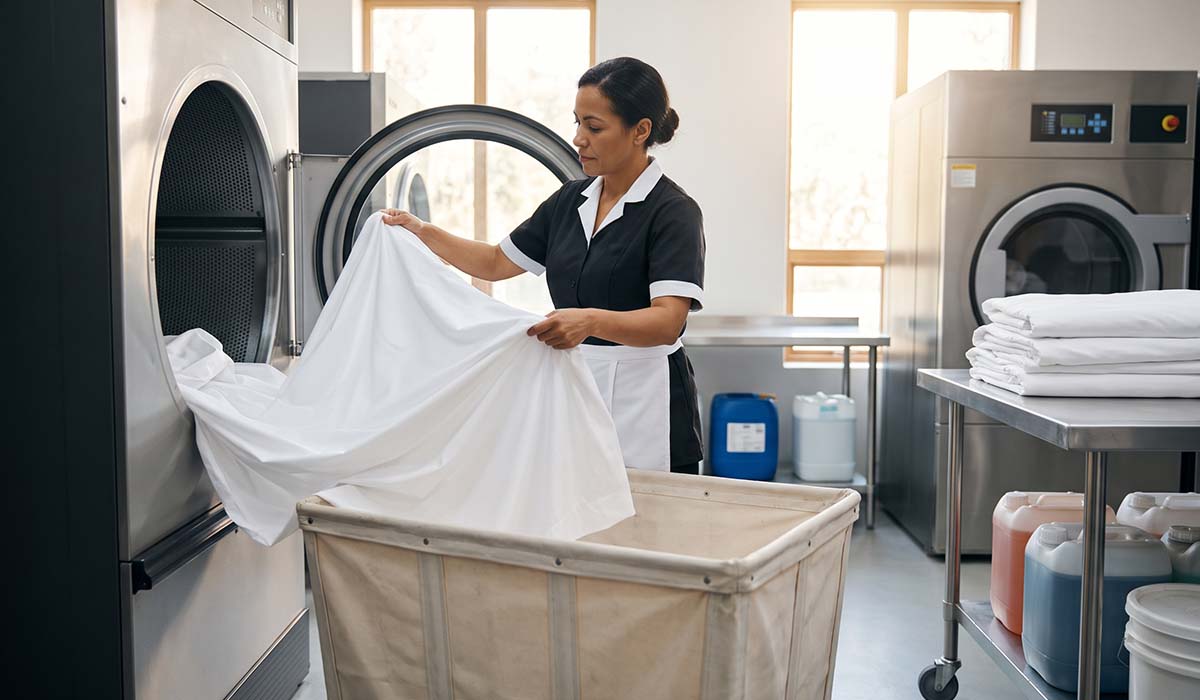
Many pilling complaints are laundry problems, not fabric problems. Even excellent sheets will pill early if they are washed harshly. Review these variables with your laundry team or your outside laundry provider.
Does High-Temperature Washing Cause Pilling?
Heat itself isn’t usually the main cause of pilling, but excessive heat combined with strong chemicals and long cycles accelerates fiber wear. Hotels still need effective washing for hygiene, so the goal is not to lower temperatures blindly. Use the temperatures and times that your detergent supplier, linen manufacturer, and local health requirements support, and avoid going beyond what’s needed.
Does Fabric Softener Cause Pilling?
Fabric softener does not directly create pills, but overuse can leave residue on fibers and build up over time. This can affect how the fabric feels and performs, and may reduce absorbency in other linens. If you use softener or finishing agents, follow dosage recommendations from your chemical supplier, and test on a small batch first.
Learn More: Why Should Hotels Invest in Color-Coded Hem Hotel Sheets?
Laundry Tips To Avoid Pilling in Hotel Bed Sheets
- Don’t overload washers. Overloaded drums cause more rubbing between items and poorer rinsing.
- Don’t underload either. A drum that’s too empty lets items tumble harder against the drum walls.
- Control chemical dosing. Over-dosing detergent, alkali, or bleach can weaken fibers. Under-dosing leaves soil that can cause its own problems. Ask your chemical supplier to audit your formulas.
- Be careful with chlorine bleach. Use it only where needed and at supplier-recommended concentrations, since it can damage fibers over time.
- Rinse thoroughly. Leftover detergent residue can make fabric feel harsh and encourage wear.
- Check water conditions. Hard water can affect wash results and may need softening or formula adjustments.
- Wash sheets with sheets. Avoid mixing sheets with abrasive items such as items with zippers, hooks, or rough textures.
If your property uses an outside commercial laundry, put these expectations in your service agreement and ask how they monitor formulas.
Option 4: Control Drying, Ironing, and Finishing
Dryers and flatwork ironers are where a lot of invisible fiber damage happens.
- Avoid over-drying. Running linens until they’re bone-dry, then continuing to tumble, stresses fibers and creates lint. Lint is fiber that has left your sheets, so lint traps full of fluff are a warning sign. Use moisture-sensing controls if available.
- Keep temperatures appropriate. Follow the linen manufacturer’s care guidance and your equipment specifications.
- Clean lint filters frequently. Blocked airflow forces longer drying times and extra tumbling.
- Don’t overload dryers. Crowded dryers lengthen drying times and cause uneven drying and friction.
- Maintain flatwork ironers. Worn or rough ironer surfaces and incorrect settings can abrade fabric on every pass.
- Fold and store correctly. Clean, dry storage prevents damage and keeps linen ready for use.
Practical Tip: Compare lint volume and the look of your oldest sheets across different machines or shifts. If one line produces noticeably more lint or more pilled sheets, that’s where to investigate first.
Learn More: Why Hotels Prefer Cotton Sheets Over Microfiber
Option 5: Run a Disciplined Linen Program
How you manage the linen inventory matters as much as the linen itself.
Rotate Stock Evenly
If some sets get pulled constantly while others sit in storage, the busy ones age far faster than the rest. Rotate first-in, first-out so wear is distributed across your par. Keeping adequate par levels (the number of sets in the system versus the number of beds) gives sheets rest time between uses. Many properties benchmark par levels against occupancy and laundry turnaround, and your own operation will determine the right number.
Inspect and Sort at the Point of Collection
Train housekeepers and laundry attendants to flag sheets with visible pilling, thin spots, stains, or tears. Separate them early so they don’t contaminate the guest-ready stock, and so you can see how quickly wear is progressing.
Standardize Sheet Types
Using a small number of consistent sheet styles and sizes simplifies inventory, reduces mix-ups, and makes it easier to track wear patterns. It also makes reorders simpler and helps with color and size consistency.
Set a Retirement Standard
Decide in advance what “retire it” looks like: for example, visible pilling that’s noticeable at arm’s length, thinning that you can see through the fabric, or stains that won’t clear after re-washing. Retire sheets to rags or secondary uses (where appropriate) instead of leaving them in guest rooms.
Track Cost Per Use
Total cost of ownership is a better yardstick than unit price. A cheaper sheet that must be replaced much sooner can cost more per use than a more durable sheet. To evaluate it, estimate:
Cost per use = (purchase price + laundering cost over its life) ÷ number of uses before retirement
Track these numbers for your own property, since results vary with laundry practice, occupancy, and standards.
Is This Pilling Due To Fabric or The Laundry?
| What you see | Likely cause to check first |
| New sheets pill within the first few washes | Yarn quality (short, carded fibers), loose yarn twist, or wash conditions that are too harsh |
| Pilling is concentrated in the center of the bed | Normal body-contact friction; check par levels and rotation |
| Pilling appears only on sheets from one wash line or provider | Formula, load size, or equipment on that line |
| Heavy lint in dryer traps and thinning fabric | Over-drying or high mechanical action |
| Sheets feel rough or stiff, not just pilled | Detergent residue, hard water, or chemical build-up |
| Pills that cling and won’t shed (blends) | Polyester content and yarn quality; consider a different construction |
DZEE Textiles Hotel Sheets Collections
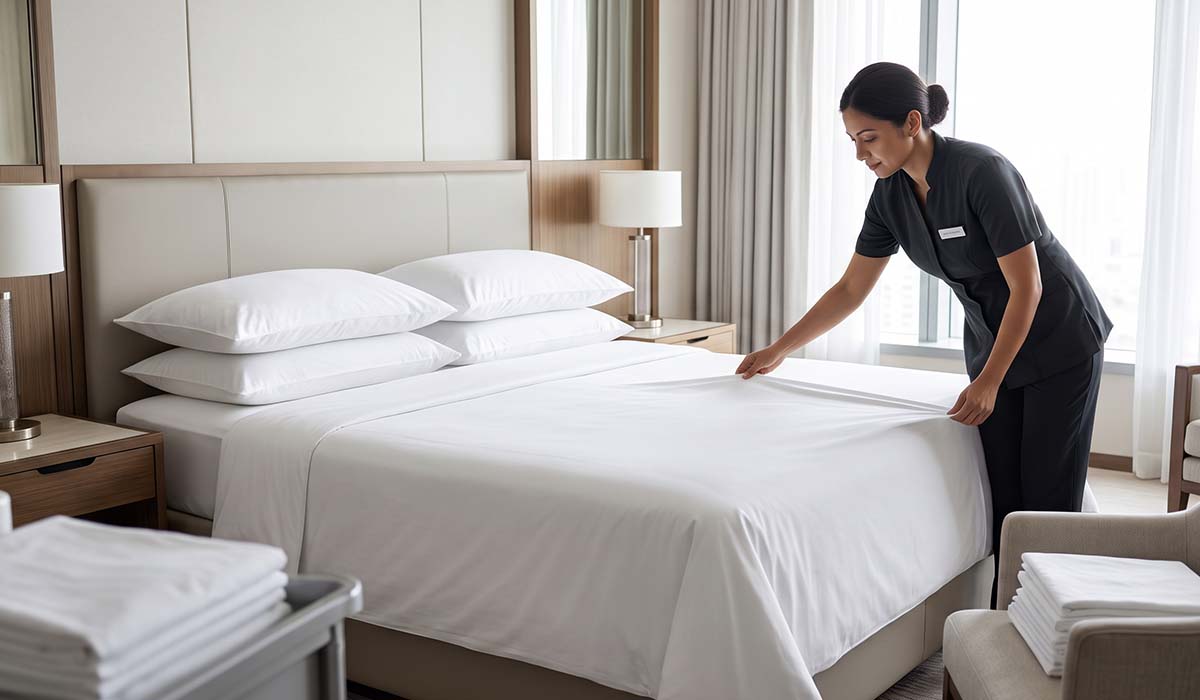
If you’relooking for anti-pilling sheets designed especially for rigorous use and commercial laundering, DZEE Textiles offers wholesale hotel bed sheets in three main categories. Match each to your property’s laundry process and guest standard:
- Blended bed sheets for hotels that want durability and efficient laundering. Options include Opal Super Blend Everyday Sheets, Icon T-200 Percale Sheets, Forte T-250 Soft Plain Satin Sheets, Swiss Stripe T-250 Tone on Tone Satin Sheets, and Icon 300 Premium Sheets.
- Cotton bed sheets for properties prioritizing a natural-fiber feel, such as Ryotei T-300 Luxury Cotton Sheets.
- Microfiber bed sheets for fast-drying, budget-conscious operations, including Opal Fast Drying Microfiber Sheets and Belem Colored Microfiber Sheets.
DZEE Textiles: No.1 Source of Hotel Supplies in the US
DZEE Textiles is your one-stop shop for all wholesale hotel supplies, serving more than 10,000 customers in the United States.
As a wholesale supplier of high-quality hotel supplies, we offer top-notch towels, bed linens, decorative bedding, hotel accessories, electrical appliances, cleaning supplies, and other hospitality items at wholesale prices, with free shipping on most orders.
With over 25 years of experience and distribution centers in Orlando, FL; Knoxville, TN; Dallas, TX; and Las Vegas, NV, we ensure quick distribution and unmatched service across the USA.
Frequently Asked Questions
-
Why do hotel sheets start pilling?
Short or broken fibers work loose from the yarn and get tangled into small balls by friction from use, laundering, and drying. Lower-quality yarn, harsh wash chemistry, overloaded machines, and over-drying all speed it up.
-
How can hotels prevent sheets from pilling?
Buy sheets made from quality yarn, match the weave to your laundry process, control wash chemistry and load sizes, avoid over-drying, and rotate and inspect linen regularly. No single step eliminates pilling, but together they slow it considerably.
-
What causes pilling on cotton bed sheets?
Mostly short cotton fibers breaking free and tangling. Carded, shorter-staple yarns tend to pill more than combed, longer-staple yarns. Rough laundering and heavy friction add to it.
-
Does high-temperature washing cause sheet pilling?
Not by itself, but high heat combined with strong chemicals and long, aggressive cycles can accelerate fiber wear. Follow your linen and chemical suppliers’ guidance and your hygiene requirements, and don’t exceed what’s needed.
-
Does fabric softener cause bed sheet pilling?
Softener doesn’t directly cause pilling, but overuse can build up residue and change how the fabric feels. Dose according to your chemical supplier’s guidance.
-
What is the best fabric for hotel bed sheets?
There’s no single best fabric. Combed cotton is often chosen for softness, cotton/polyester blends for durability and easy care, and microfiber for fast drying and low cost. Choose based on your guest standard, laundry process, and cost per use.
-
Is a higher thread count better for preventing pilling?
Not necessarily. Yarn quality, fiber length, and construction matter at least as much as thread count. A moderate thread count made from good yarn can outlast a higher count made from weak yarn.
-
How can hotels extend the lifespan of bed sheets?
Rotate stock evenly, keep adequate par levels, wash sheets separately from abrasive items, avoid overloading machines, control chemicals, stop drying at the right moisture level, and inspect and retire worn sheets on schedule.
Final Words
If pilling is driving up your linen replacement costs, start by auditing your wash and dry process, then compare sheet options on yarn, weave, and composition rather than thread count alone. To see current options and request samples or wholesale pricing, browse the DZEE Textiles hotel bed sheets collection or contact the DZEE team with your property type, bed count, and laundry setup.