Purchasing managers know the frustration of bed sheets pilling or yellowing after just a few commercial laundry cycles. Balancing unit costs with quality is a constant challenge: Is microfiber the future, or does cotton remain the gold standard?
After over two decades in the supply chain for hospitality textiles, we’ve learned that there is no singular “best” material. There is only the material that fits your specific operational needs, your laundry routines, and your guest profile.
This guide provides a neutral, data-driven analysis of fabric performance to help you optimize your linen inventory strategy.
Table of Contents
How Microfiber & Cotton Perform In Commercial Settings
To make an informed decision, you must understand the physical properties of the fibers you are putting on your hotel’s beds.
The Case for Microfiber Sheets (Synthetic)
Microfiber is a fine-denier polyester, a synthetic polymer. It is engineered for modern convenience.
- Energy Efficiency: Because microfiber is hydrophobic (water-repelling), it requires significantly less energy and time to dry. In properties with high turnover or limited laundry hours, this operational speed is a major asset.
- Consistency: As a synthetic product, it has a highly consistent structure. You won’t find the natural variations that occur in cotton crops.

- Wrinkle Resistance: Microfiber bed sheets naturally resist wrinkling, which can save valuable labor hours in properties where pressing or ironing is not part of the standard housekeeping protocol.
The Case for Cotton Sheets (Natural)
Cotton is a cellulose fiber, favored for its tactile properties and reliability.
- Breathability: Cotton is porous and naturally absorbent. It wicks moisture away from the guest, which is a key factor in sleep comfort, especially in humid or tropical climates.
- Tensile Strength: High-quality cotton bed sheets actually become stronger when wet, making them highly resilient against the mechanical agitation of commercial washers.
Learn More: The Difference Between Short Staple and Long Staple Cotton Sheets
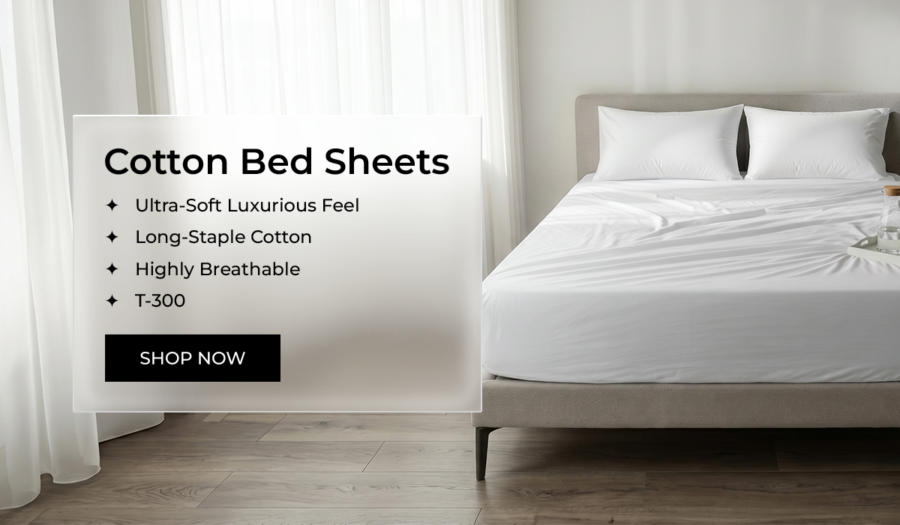
- The “Hand-Feel”: For luxury and boutique properties, the crisp, cool, and breathable nature of cotton is often considered an essential part of the brand’s promise to the guest.
The “Middle Ground”: Poly-Cotton Blends
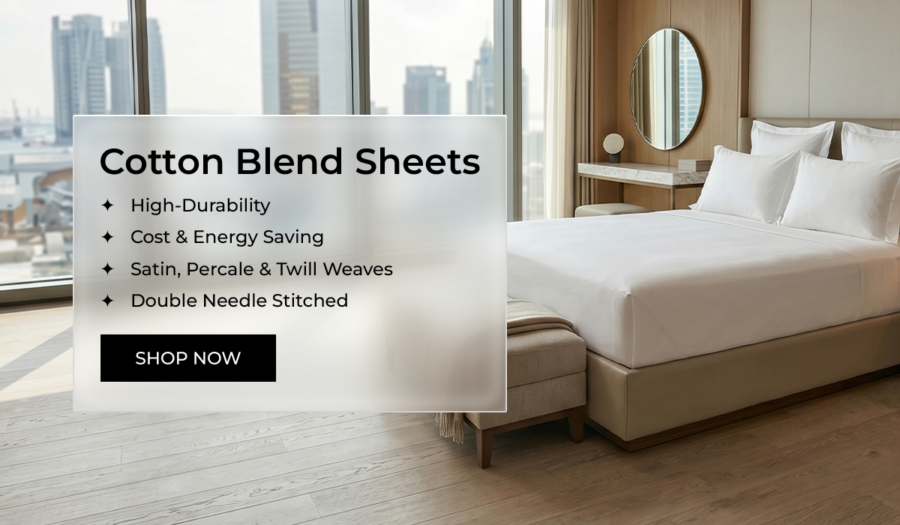
Many successful hoteliers cotton blend bed sheets (typically 60/40 or 70/30 polycotton blend). This offers a tactical compromise, leveraging the durability and wrinkle-resistance of polyester with the comfort and breathability of cotton sheets.
It is the “Sweet-Spot” of the industry for a reason; it’s built to survive the stress of industrial machinery while keeping costs manageable.
Comparative Analysis for Cotton Vs. Microfiber Sheets
| Feature | Microfiber | Poly-Cotton Blend | 100% Cotton |
| Drying Time | Very Fast | Moderate | Slow |
| Breathability | Low (Traps heat) | Moderate | High |
| Durability | High (Resistance to tearing) | High (Structural balance) | Very High (When high-grade) |
| Wrinkle Resistance | Excellent | Good | Low |
| Cost-per-Use | Low | Low-Moderate | Moderate-High |
The Hidden Costs: TCO vs. Unit Price
As a purchasing manager, your primary metric should be Total Cost of Ownership (TCO), not the initial invoice price.
- The Replacement Cycle: A lower-cost sheet that survives 40 wash cycles is more expensive than a higher-cost sheet that survives 120 cycles. When calculating ROI, factor in the costs of logistics, inventory storage, and the labor required to restock.
Learn More: How Low-Priced Hotel Bed Sheets Can Cost You More?
- Laundry Logistics: Your laundry setup dictates your success.
- On-Premise Laundry (OPL): If you control your own chemistry and heat levels, you can effectively manage 100% cotton sheets.
- Outsourced Services: If you use a third-party laundry service that prioritizes high-temperature throughput, microfiber or high-poly blends are often the safer, more durable choice.
What to Look for Before You Buy Commercial Sheets
Regardless of the fiber content, a high-quality product is determined by its manufacturing specifications. When evaluating a new supplier, look for these three indicators of quality:
- GSM (Grams per Square Meter): Do not focus solely on “thread count,” which can be easily manipulated. GSM measures the actual density and weight of the fabric. A higher GSM generally correlates with a longer lifespan.
- Tensile Strength Reports: A reputable manufacturer should be able to provide data on the force required to break the fabric. This is the only objective measure of how your sheets will handle the “industrial assault” of a commercial laundry.
- Reactive Dyeing: For colored linens, ensure the supplier uses reactive dyes. Unlike pigment dyes that sit on the surface, reactive dyes bond to the molecule, ensuring the fabric retains its color without yellowing or fading after repeated exposure to alkaline detergents.
Learn More: T200 Vs. T300 Hotel Sheets: Which Is Better For Your Property?
DZEE Textiles: No.1 Source of Hotel Supplies
DZEE Textiles is your one-stop shop for all wholesale hotel supplies, serving more than 10,000 customers in the United States.
As a wholesale supplier of high-quality hotel supplies, we offer top-notch towels, bed linens, decorative bedding, hotel accessories, electrical appliances, cleaning supplies, and other hospitality items at wholesale prices, with free shipping on most orders.
With over 25 years of experience and distribution centers in Orlando, FL; Knoxville, TN; Dallas, TX; and Las Vegas, NV, we ensure quick distribution and unmatched service across the USA.
Final Words: Matching Fabric to Strategy
The “best” bed sheet for your hotel is not necessarily the most expensive or the most natural; it is the one that achieves the lowest cost-per-use while aligning with your brand’s standards for guest comfort.
If you are currently managing an inventory that seems to “disappear” or degrade too quickly, it is time to shift the conversation from “unit price” to “performance specifications.” Whether your property benefits from the energy efficiency of microfiber sheets, the durability of a blend, or the guest-centric comfort of cotton sheets, the key is to ensure the product is engineered for the industrial environment.
Need help auditing your current linen program?
We specialize in B2B hospitality textile manufacturing. We don’t just sell sheets; we help you analyze your laundry infrastructure and supply chain to optimize your inventory longevity. Call us at +1 800-505-0038 or email us at [email protected].