

The texture of bed linens significantly influences sleeping comfort. Two popular weaves, sateen and percale, offer different practical approaches.
When selecting hotel sheets, the type of fabric weave is an important consideration. Sateen and percale sheets are common choices, each with a different feel.
Sateen is known for its smooth and soft touch. Percale has a crisp and cool feel.
In this guide, we’ll break down the key differences between sateen and percale sheets, highlight what most luxury hotels and top hospitality brands prefer, and help you make a smart, budget-friendly decision when buying wholesale bed sheets.
Table of Contents
Sateen vs. Percale Sheets: What’s the Difference?
Percale offers a cool, crisp, and airy feel, perfect for those who love a fresh, hotel-like bed. Sateen delivers a smooth, buttery finish with a subtle sheen, ideal for a cozier, elegant touch. Percale is lightweight and breathable, while sateen is slightly heavier, softer, and naturally more resistant to wrinkles.
Before diving into the specifics of percale and sateen sheets, let’s first discuss what sheet weave means.
Understanding the Basics: What Is a Sheet Weave?
It’s important to understand that “percale” and “sateen” refer to the weave pattern of the fabric, not the material itself.
Most hotel sheets are made from high-quality, long-staple cotton or a durable poly-cotton blend, but how they’re woven affects the feel, performance, and lifespan of the sheets.
You can also read this: Which One is the Best Choice, Sateen or Percale Sheet?

- Percale weave: A classic one-over-one-under pattern that creates a matte finish, crisp texture, and breathable fabric.
- Sateen weave: A luxurious one-under, three-over pattern that produces a soft, silky, and slightly heavier sheet with a subtle sheen.
Quick Comparison: Percale vs. Sateen Sheets for Hotels
| Feature | Percale Sheets | Sateen Sheets |
| Weave Type | One-over-one-under | One-under-three-over |
| Texture | Crisp, cool, matte | Silky, smooth, subtle sheen |
| Ideal For | Warm climates, hot sleepers, year-round | Cooler climates, guests who prefer cozy |
| Durability | Very durable, gets softer over time | Soft out of the box, moderate durability |
| Care & Maintenance | Wrinkles easily, needs ironing | Wrinkle-resistant, smooth finish |
| Common in Luxury Hotels | Yes (used by most 4-5 star hotels) | Select boutique and luxury resorts |
| Wholesale Availability | Widely available in bulk for hotels | Available in premium hotel linen collections |
Percale Sheets: Features, Pros, and Cons for Hotels
When it comes to reliable hotel bed sheets, percale is a top choice for many leading hospitality brands. Known for its crisp, cool, and breathable feel, percale sheets are often the standard in 4-star and 5-star hotel properties across the U.S. and globally.
But what makes percale ideal for hotels, and where might it fall short? Let’s unpack the details.

What Are Percale Sheets?
Percale sheets are crafted using a one-over-one-under weave pattern that creates a tight, matte-finished fabric. Typically made from 100% combed cotton or a poly-cotton blend in commercial-grade hotel bedding, this weave produces a fabric that feels crisp and gets softer over time.
Percale sheets are often associated with a ‘hotel bed feel’ — cool to the touch, breathable, and ideal for warm sleepers.
Key Features of Percale Sheets for Hotels:
- Crisp, breathable texture perfect for year-round use
- Highly durable for frequent commercial laundering
- Matte, classic hotel-style finish
- Hypoallergenic — ideal for guests with sensitive skin
- Gets softer with every wash
Pros of Using Percale Sheets in Hotels:
Breathability: Percale sheets allow excellent airflow, keeping guests cool and comfortable, especially important in warmer climates or for properties with year-round bookings.
Durability: Thanks to their tight weave, percale sheets withstand repeated washing at high temperatures without losing shape or texture. This makes them a cost-effective long-term choice for hotels.
Hypoallergenic: Cotton percale is naturally hypoallergenic, reducing the risk of irritation or allergies for sensitive guests.
Classic Hotel Aesthetic: The matte finish and crisp texture deliver that authentic ‘hotel bed feel’ guests expect from luxury properties.
Versatile for All Seasons: While naturally cool, percale sheets can be layered with duvets or blankets in colder months.
Cons of Using Percale Sheets in Hotels:
Wrinkles Easily: Percale tends to wrinkle more than sateen, often requiring ironing or careful folding for a polished, guest-ready look.
Initial Stiffness: New percale sheets can feel overly crisp or stiff for some guests until softened by multiple washes.
Less Silky Feel: Unlike sateen, percale offers a matte, textured finish, which might not appeal to guests preferring silky or smooth bedding.
Are Percale Sheets Right for Your Hotel?
If your hotel caters to:
- Warm weather destinations
- Guests who prefer cool, breathable sheets
- Mid-scale to luxury brands focused on classic bedding aesthetics
- Properties that prioritize durability and hypoallergenic features
…then percale sheets are an excellent choice for your hotel bedding.
Many of America’s most respected hotel chains use our Icon T-200 Percale Bed Sheets as their go-to standard, not only for guest comfort but also for operational efficiency in high-volume laundering.
Sateen Sheets: Features, Pros, and Cons for Hotels
While percale sheets offer a crisp, breathable experience, many upscale hotels prefer the smooth, silky finish of sateen sheets. Especially popular in luxury suites and premium room categories, sateen sheets deliver a sense of indulgence that elevates the guest’s stay.
Here’s what makes sateen sheets a favorite in high-end hospitality—and where you might need to exercise caution.
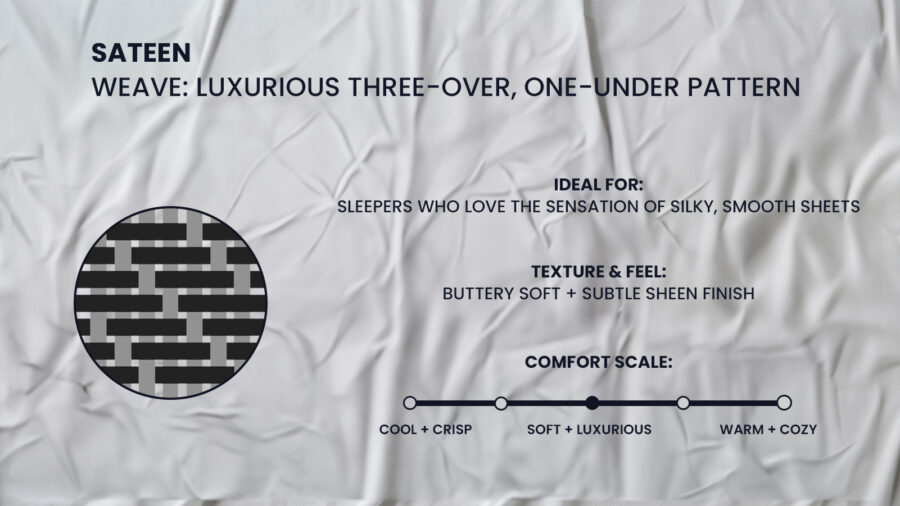
What Are Sateen Sheets?
Sateen sheets are made using a three-over-one-under weave pattern, which produces a tighter, lustrous surface with a silky hand feel. Typically woven from 100% combed cotton or a cotton-polyester blend, sateen sheets are heavier and smoother than percale, offering a more elegant drape and subtle sheen.
The weave structure makes sateen naturally warmer and softer to the touch, appealing to guests seeking a plush, luxurious sleep experience. This makes them an excellent choice for those who prefer a cozy and warm sleeping environment. But what about the fabric itself? Here, we also explore the differences between pure cotton and blended cotton sheets, which can influence your decision when selecting the perfect bedding.
Key Features of Sateen Sheets for Hotels:
- Soft, silky texture with a light sheen
- Heavier drape compared to percale
- Naturally wrinkle-resistant due to the tight weave
- Excellent color retention for dyed options
Pros of Using Sateen Sheets in Hotels:
Luxurious Hand Feel: The silky, smooth finish of sateen sheets enhances the sense of luxury, especially in executive suites, spa retreats, and 5-star hotels.
Wrinkle Resistance: Unlike percale, sateen sheets are naturally more resistant to wrinkles, making them easier to manage and present sharply on hotel beds.
Elegant Appearance: The soft sheen and fluid drape of sateen give hotel rooms a polished, upscale aesthetic.
Warmth & Comfort: Sateen’s tighter weave makes it a warmer option, ideal for cooler climates or properties catering to guests who prefer a cozier bedding environment.
Cons of Using Sateen Sheets in Hotels:
Less Breathable: Compared to percale, sateen sheets are less airy and may feel too warm for hot sleepers or properties in tropical locations.
Slightly Lower Durability: While sateen feels luxurious, its weave is more prone to pilling and abrasion after repeated high-temperature washes — something to consider for high-turnover properties.
Higher Maintenance Cost: The premium nature and slightly more delicate structure of sateen sheets can mean higher replacement rates over time compared to percale.
Are Sateen Sheets Right for Your Hotel?
Sateen sheets work beautifully for:
- Luxury hotels and resorts
- Premium and executive room categories
- Properties in cooler climates
- Hotels focused on providing an indulgent, spa-like sleep experience
If your guest reviews highlight preferences for soft, silky bedding, or you’re seeking to enhance your room’s visual appeal with a light, elegant sheen, sateen sheets are a smart investment.
Read More: Best Hotel Bed Sheet to Buy
How to Decide:
Choose Percale Sheets if:
- You operate a luxury, upscale, or business-class hotel
- Guest comfort and breathability in warm climates is a priority
- You want a classic, crisp hotel bed presentation
Choose Sateen Sheets if:
- You manage a boutique, spa retreat, or upper-midscale hotel
- Guests appreciate softness and a silky, cozy feel
- Your property is located in a cooler region
Choose Microfiber Sheets if:
- You run an economy, midscale, or high-turnover property
- Operational efficiency and cost control are top concerns
- Your hotel requires fast-drying, wrinkle-free, easy-care linens
Read More about Microfiber Sheets
In addition to comfort and fabric type, the environmental impact of your bedding choices is increasingly important. Traditional bed sheets can contribute to pollution and resource depletion during production and disposal. Fortunately, there are eco-friendly options available, particularly in the world of cotton sheets. Eco-friendly cotton bed sheets are often grown without harmful pesticides and chemicals, making them a sustainable choice that is gentle on the planet while still providing a delightful sleeping experience.
Dzee Textile: A Leading Wholesale Hotel Bed Sheet Supplier!

Contact us today for the best quotes on premium percale, sateen, and microfiber hotel bed linens — tailored to your property’s needs and guest expectations.
Our Final Verdict
Sateen sheets deliver a soft, silky feel ideal for luxury hotels and boutique properties aiming to leave a lasting impression with every guest stay. Percale sheets, on the other hand, offer a crisp, cool, and breathable experience perfect for hotels prioritizing elegance with durability, especially in warm climates or upscale settings.
Meanwhile, Microfiber bed sheets provide a practical, cost-effective solution for midscale and economy hotels where operational efficiency, easy care, and budget-friendly pricing matter most.
Ultimately, the smartest hoteliers strike a thoughtful balance — pairing sheet types with room categories, seasons, or guest preferences. Whether you prioritize indulgent softness, classic crispness, or everyday reliability, choosing the right bed linen elevates both your guest experience and your operational performance.


