

White sheets turn yellow due to chemical oxidation when body oils, sweat, and skincare residues lock into fabric fibers. This discoloration worsens when commercial laundries use excessive chlorine bleach or fail to rinse out wash chemicals. Over time, high-heat drying bakes these chemical residues into the fabric, creating permanent yellow stains on white bed sheets.
This guide provides housekeeping and procurement teams with strategies to adjust chemical formulas, manage supply chains, and maximize linen longevity to protect operational budgets.
Key Takeaways
- Oxidation drives yellowing when trapped body oils, sweat, and cosmetic residues are exposed to heat.
- Chlorine bleach damages your sheets by stripping away optical brighteners and reacting with proteins to worsen stains.
- Controlled drying temperatures below 160°F (71°C) prevent remaining organic residues from baking into the fabric.
- Complete rinsing cycles are essential to remove detergent buildup, fabric softener residue, and hard water minerals.
- Commercial-grade linens save your property money by lasting through 150 industrial wash cycles without losing their bright white finish.
Table of Contents
The Commercial Impact of Yellowing Hotel Linens
In the hospitality industry, clean linens represent your brand’s commitment to hygiene. Yellowing luxury hotel linens signal poor quality to guests, which ruins your online review scores.
For hotel purchasing managers, premature linen yellowing creates a severe financial drain. When commercial hotel sheets discolor, they fail your quality control inspections. This forces your property to accelerate its linen replacement schedules.
Unplanned linen replacement directly reduces your GOPPAR (Gross Operating Profit Per Available Room). If your property discards commercial hotel bed sheets months ahead of schedule, your supply chain costs skyrocket. Keeping your wholesale white bed sheets bright ensures long-term profitability and protects your operating margins.
The Science of Yellowing: Why Do White Sheets Turn Yellow?
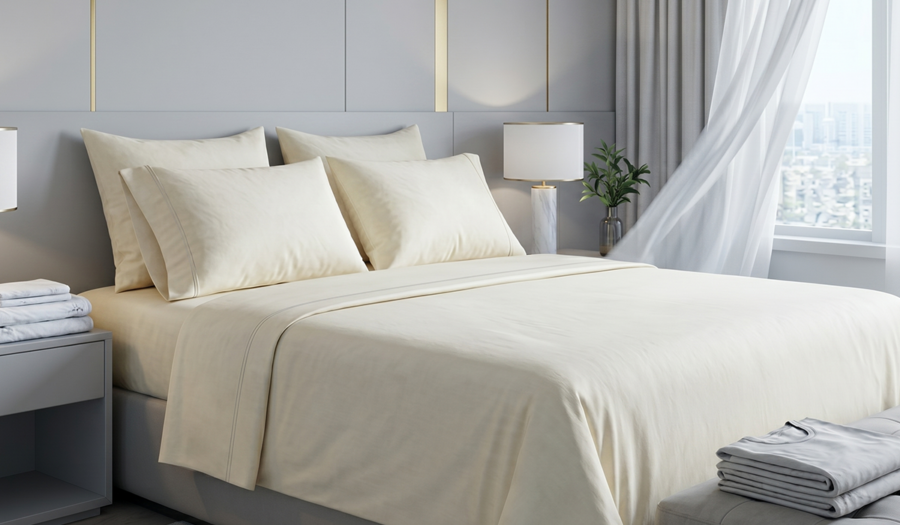
To fix yellowing, you must understand textile oxidation, which is the chemical breakdown of fibers from oxygen exposure. This process happens when organic substances trap themselves inside cotton fibers or microfiber sheets.
Body Oils and Sweat Stains
Every guest leaves behind body oils, sebum, and sweat stains during sleep. Sebum is the oily secretion from human skin glands that lubricates skin and hair.
If your industrial washing machines do not completely strip these lipids away, they oxidize during the drying cycle. This chemical reaction turns invisible oils into stubborn yellow stains on white bed sheets.
Chemical and Skincare Residue
Guests frequently use heavy sunscreens, body lotions, and advanced skincare products. These items contain complex lipids and silicones that bind tightly to percale sheets and sateen sheets.
Standard whitening detergents often fail to break down these modern cosmetic formulas. The remaining residue discolors instantly when exposed to commercial laundry heat.
Hard Water, Minerals, and Improper Rinsing
Hard water contains high levels of iron in water and calcium minerals. When these minerals interact with laundry chemicals, they form mineral deposits on cotton bed sheets.
If your commercial laundry systems suffer from improper rinsing, these minerals remain on the fabric. During high heat drying, the trapped minerals bake into the textile fibers, causing widespread discoloration.
Chemical Missteps: Does Bleach Turn White Sheets Yellow?
Many housekeepers use chlorine bleach to fix fabric yellowing, but this often makes the problem worse. So, does bleach turn white sheets yellow? Yes, it frequently does when used incorrectly in commercial hotel laundry operations.
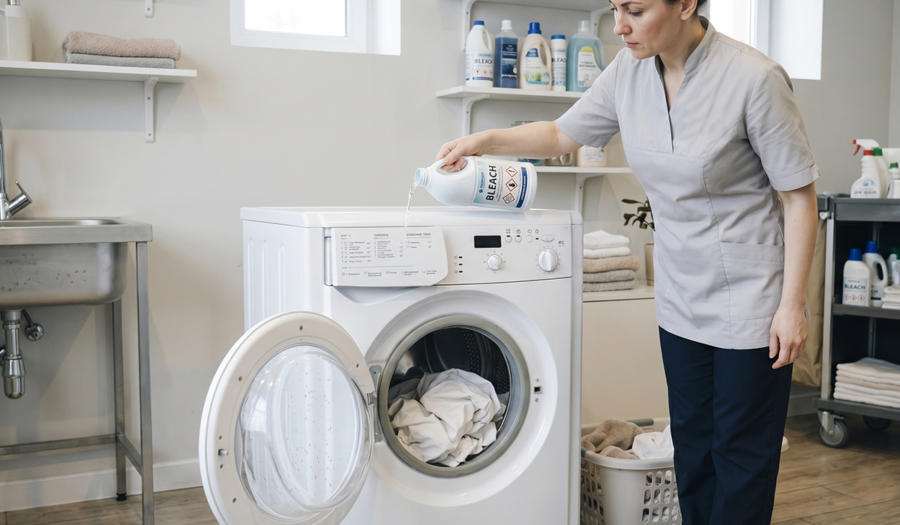
Excessive Chlorine Bleach → Weakens Cotton Fibers → Exposes Yellow Core Polymers
The Destructive Nature of Chlorine Bleach
Most white hospitality bedding undergoes a fabric whitening process during manufacturing using optical brighteners. Chlorine bleach strips these synthetic brighteners away, revealing the natural yellowish hue of raw cotton fibers.
Additionally, chlorine chemically reacts with proteins found in sweat stains and body oils. This reaction darkens the stain rather than removing it.
Alternative Whitening Agents
To preserve fabric strength and brightness, modern commercial laundries use oxygen bleach instead of chlorine. Oxygen bleach relies on hydrogen peroxide to lift organic stains without damaging textile structures.
Using oxygen-based fabric whitening agents maintains your linen’s original look without weakening the underlying yarn. This switch keeps your sheets white and significantly extends their commercial service life.
Step-by-Step Hospitality Linen Care Tips for Commercial Laundries
Fixing yellowing requires a systematic textile maintenance process. Follow this structured workflow in your hotel laundry operations to eliminate yellowing factors completely.
1. Water Treatment Verification
Analyze your laundry water supply to check for hard water minerals and iron content. Install commercial water softeners if your iron levels exceed 0.1 ppm (parts per million). This prevents mineral binding before your water enters your industrial washing machines.
2. Precise Chemical Dosages
Work with your chemical supplier to match your whitening detergents to your specific water profile. Program your automated dispensing systems to use exact chemical ratios. This setup eliminates manual errors and stops detergent buildup and fabric softener residue from occurring.
3. Multi-Stage Flush and Wash Cycles
Run a dedicated flush cycle using lukewarm water to dissolve water-soluble sweat stains before adding chemicals. Use a high-surfactant wash cycle at 140°F (60°C) to break down heavy body oils and cosmetic creams.
4. Advanced Rinsing Protocols
Program at least two clear-water rinse cycles to remove all suspended soils and remaining alkaline laundry chemicals. Check the rinse water pH; it should match your incoming water supply to confirm no residue remains.
5. Controlled Temperature Drying
Dry your bulk hotel bedding using a targeted cool-down cycle at the end of the drying process. Never allow the drum temperature to exceed 160°F (71°C) during the main drying cycle. High heat bakes residual organic matter into the sheets, creating permanent discoloration.
Learn More: How To Maintain Your Hotel White Sheets?
How Hotels Keep Sheets White: Sourcing Durable Hotel Sheets
Industrial maintenance alone cannot save poorly made textiles from yellowing. Your long-term strategy must focus on sourcing high-quality, commercial-grade linens built for industrial environments.
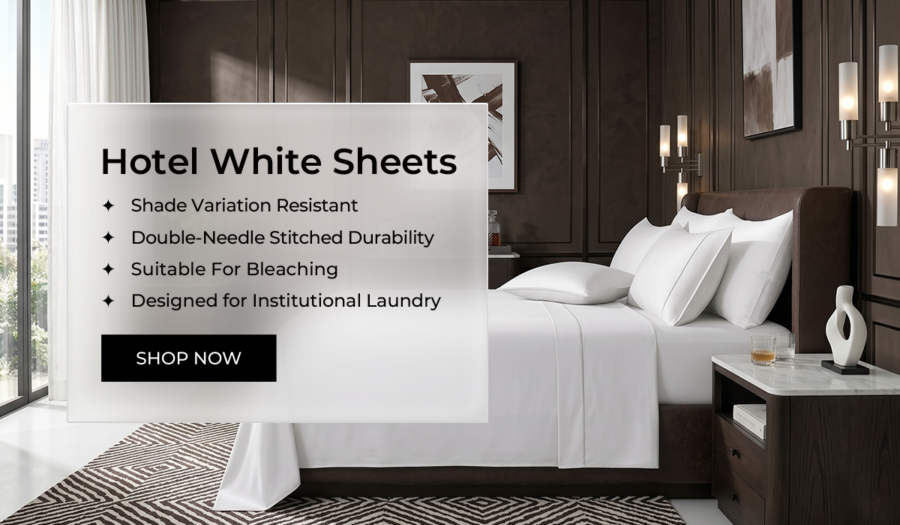
When you purchase wholesale white bed sheets from DZEE Textiles Bed Sheets, you buy commercial bedding engineered for durability. Our textiles are specifically designed to withstand the harsh conditions of automated laundry systems.
Our advanced Blended Bed Sheets balance premium comfort with heavy-duty construction. For properties focused on high-volume efficiency, the Opal Super Blend – Everyday Sheets offer exceptional durability and fast drying times.
If your brand demands a classic, crisp texture, our Icon T-200 Percale Sheets deliver traditional style with reinforced hems. For upscale properties, the Forte T-250 Soft Plain Satin Sheets and Swiss Stripe T-250 Tone on Tone Satin Sheets provide a luxurious satin feel that resists yellowing.
Luxury properties can step up to the Icon 300 Premium Sheets or our finest Ryotei T-300 Luxury Cotton Sheets. These premium collections use dense, high-thread-count weaves that prevent oils from penetrating deep into the yarn core.
Common Mistakes in Hospitality Supply Chains and Linen Care
Commercial laundries often make simple procedural mistakes that ruin high-quality textiles. Identifying these errors saves your property thousands of dollars in replacement costs.
| Operational Mistake | Negative Impact | Strategic Correction |
| Overloading washing machines | Traps body oils in the fabric | Limit wash loads to 80% capacity |
| Excessive fabric softener | Creates a waterproof chemical film | Reduce softener use to every third wash |
| Skipping sorting protocols | Causes gray dye transfer | Separate hospitality bedding from towels |
| Inadequate rinse cycles | Leaves alkalis behind to scorch fibers | Implement a souring rinse to balance pH |
Consider a regional mid-scale hotel group that faced widespread sheet yellowing across three properties. Their housekeeping teams assumed the issue was bad fabric and prepared to replace their entire inventory.
An inspection showed their staff was packing washing machines to 100% capacity to save time. This stopped the detergent from rinsing out, causing the remaining chemicals to scorch inside their high-heat dryers.
By reducing load sizes to 80% capacity and lengthening the rinse cycles, they saved their inventory. This operational adjustment eliminated their yellowing issues and saved the company over $14,000 in replacement costs.
Learn More: Why Hotel Bed Sheets Are Always White?
Measuring Linen Lifecycle Success and ROI
To optimize your linen procurement budget, your management team must track key textile performance metrics. Monitoring these figures helps you justify buying higher-quality, stain-resistant sheets.
Your properties should target a wash life of 120 to 150 industrial cycles before retirement. If your sheets turn yellow and fade after just 60 cycles, your linen cost-per-room doubles.
Investing in premium wholesale white bed sheets lowers your long-term replacement costs. Durable hotel sheets preserve their brightness, keeping your rooms in service and your guests happy.
Future Trends in Commercial Bedding and Hospitality Textiles
The hospitality linen market is shifting toward smarter, more sustainable fabric options. Modern properties are moving away from easily damaged fabrics to protect their bottom lines.
Engineering Stain-Resistant Fibers
Textile manufacturers are now treating cotton fibers with safe, eco-friendly barriers. These treatments repel body oils and cosmetic creams on contact.
This technology prevents oils from absorbing deep into the yarn, allowing laundries to wash sheets at lower temperatures. This change protects your linens and cuts your energy use.
Sustainable Laundering Practices
Modern commercial laundry operations are reducing their environmental footprint by switching to cold-water detergents and ozone wash systems. Ozone laundry systems use oxygen molecules to sanitize linens and lift organic stains at cooler temperatures.
These advanced systems reduce the need for harsh chemicals, helping hotels extend their linen life and meet environmental goals. To learn more about why hotels rely on white textiles, check out our guide on why do hotels use white sheets.
FAQ Section
-
Why do hotel sheets turn yellow after washing if we use standard commercial detergent?
Standard detergents often cannot dissolve heavy cosmetic silicones, body oils, and sweat stains. When these organic compounds remain in the cotton fibers, they oxidize during the high-heat drying cycle. This chemical reaction turns the trapped oils into visible yellow stains. To fix this, your laundry team should use high-surfactant detergents and longer rinse cycles to strip away all organic residues.
-
Can bleach yellow white sheets over long-term laundering cycles?
Yes, frequent use of chlorine bleach weakens cotton fibers and destroys the synthetic optical brighteners applied during manufacturing. Once these brighteners are stripped away, the natural, off-white yellow core of the cotton fiber becomes visible. Chlorine bleach also reacts with proteins in sweat stains, which sets the yellow discoloration permanently instead of cleaning it.
-
What is the most effective way to remove yellow stains from sheets in a commercial laundry?
To remove tough yellow stains, run a restoration wash cycle using an oxygen-based bleach booster at 140°F (60°C). Add a specialized commercial laundry sour during the final rinse to neutralize alkaline residues and lower the fabric pH to 6.0. This chemical adjustment releases trapped mineral deposits and dissolves the oxidized body oils, causing the stains.
-
How often do hotels replace sheets due to yellowing or fabric thinning?
High-utilization properties usually replace their linens every 10 to 12 months, assuming their sheets last 120 to 150 industrial wash cycles. However, if a property uses poor laundry processes or low-grade bedding, yellowing can force replacements in under six months. Buying commercial-grade linens from trusted suppliers like hotel bed Sheets prevents early yellowing and protects your budget.
-
Does hard water contribute to yellow stains on white bed sheets?
Yes, hard water contains dissolved iron and calcium minerals that stick to fabric fibers during the wash cycle. If your laundry system does not completely rinse the water out, these minerals oxidize and scorch when exposed to dryer heat. Over time, this mineral buildup turns your crisp white bed sheets a dull yellow or gray color.
-
Why should hotel procurement managers choose blended bed sheets over 100% consumer cotton?
Blended bed sheets combine the natural comfort of cotton with the tensile strength of polyester. This combination helps the fabric resist tearing and chemical damage during industrial laundering. Polyester fibers absorb less organic oil than pure cotton, making blended sheets much less likely to yellow over time.
Conclusion
Linen yellowing is an operational challenge that directly impacts guest satisfaction and your property’s bottom line. By understanding the causes of fabric oxidation and using precise laundry workflows, your team can eliminate this issue. Protecting your bedding investment requires a balance of proper chemical management, soft water treatment, and controlled drying temperatures.
Sourcing durable hotel sheets built for commercial use is the best way to prevent premature yellowing. High-quality textiles keep your rooms looking pristine, lower your replacement costs, and protect your operating margins.
Ready to upgrade your property’s bedding and extend your linen lifecycles? Explore our commercial bedding solutions and request a custom bulk quote today at DZEE Textiles.


