

A towel is always considered as a piece of soaking cloth or paper used for drying or sponging a body, furniture, or any other surface. It draws moisture through direct contact. There are several types of towels that are used on a daily basis in different forms like hand towels, bath towels, towels for the kitchen, etc. Gym towels are almost a part of the basic kit. When you visit a salon you would use different kinds of towels after each treatment. When you visit a hotel don’t you fall in love with the softness of the hotel towels? Well, you see here that towels play a very essential role in our day-to-day routine.
When you bring home a brand new towel it almost feels like heaven, soft, fluffy and so absorbent. But over a period of time there is a build-up on towels that affects the look, feel, and performance of your towels.
Things that make your towel fabric hard include hard water, dryer sheets, your choice of detergent, and even your washing machine.
Causes of build-up include: Using too much detergent, especially in front-loading machines which use less water and are likely to leave a residue behind, using liquid fabric softener which is oil, petroleum-based, and leaves a slick coating on towel fibers. Hard water is high in minerals that make it hard for the detergent to dissolve, leaving you with dirty and smelly towels and a gummy build-up.
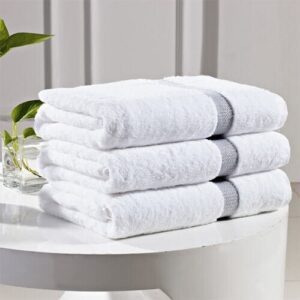
The most common question that people usually ask is “how do they get their towels to dry better or improve their absorbency?”
Well, the answer to that is first, check your laundry powder or liquid, if it contains any built-in Fabric softeners, do not use this product on your towels. Every fabric softener will actually hold back the ability to absorb in your towels’. To help in eliminating any extra softening agents from your towels, you must clean the towels separately from other laundry pieces for the next two washes, without drying them in between, and try the following:
Table of Contents
Load the towels into an empty washing machine
You don’t want to overload your washer, so try to keep the number of towels in one wash to about half of a load. If you have different types of dark and light towels, you must organize segregate loads so that the dark towels don’t leave colors onto the light towels. Once done with this, you can start the cleaning process with hot water. Fill the washer completely.
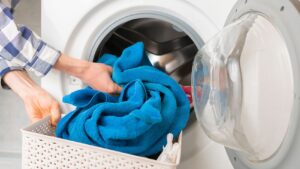
Pour 1 cup of white vinegar (240 ml) to the warm water
The hot water is aided by the vinegar in the breakdown of the fabric softeners. Moreover, it helps in making the fabric soft with no oil residue on them.
Let the washer go through a complete rinse cycle.
A full circulation will cover rinse and spin cycles. Once the full circulation is done, there shouldn’t be any water left in the washer. Vinegar may leave its scent on your towel after the first wash, but that’s okay!. The scent of vinegar will vanish after the second wash.
Start next wash circulation without drying your towels first.
Make sure you haven’t took your towels out of the washing machine to dry them yet! Instead, leave the towels in the washing machine and wait for the hot water to fill up again. Make sure to choose the same settings that you used previously.
Pour 1/2 cup (120 g) of baking soda into the second rinse round
Make sure you pour the baking soda while the washer is entirely filled with water. Once the baking soda is blended with some vinegar that is still on the towels, it will generate a chemical reaction, neutralizing any remaining vinegar and eliminating the detergent or fabric softener which is keeping your towels away from being absorbent
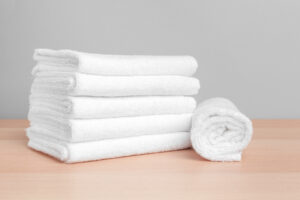
Take out the towels from the washer and dry them.
There are several useful methods that you can follow like—your dryer, a drying rack, or air drying in the sun.
Here at D-ZEE Textiles, caring for fine fabric is our specialty. Through lifelong research and study of luxury sheets, towels, and table linens, we found that while many of the commercially available “gentle detergents” could still harm fabrics, they didn’t get the job done.


Leave a Comment