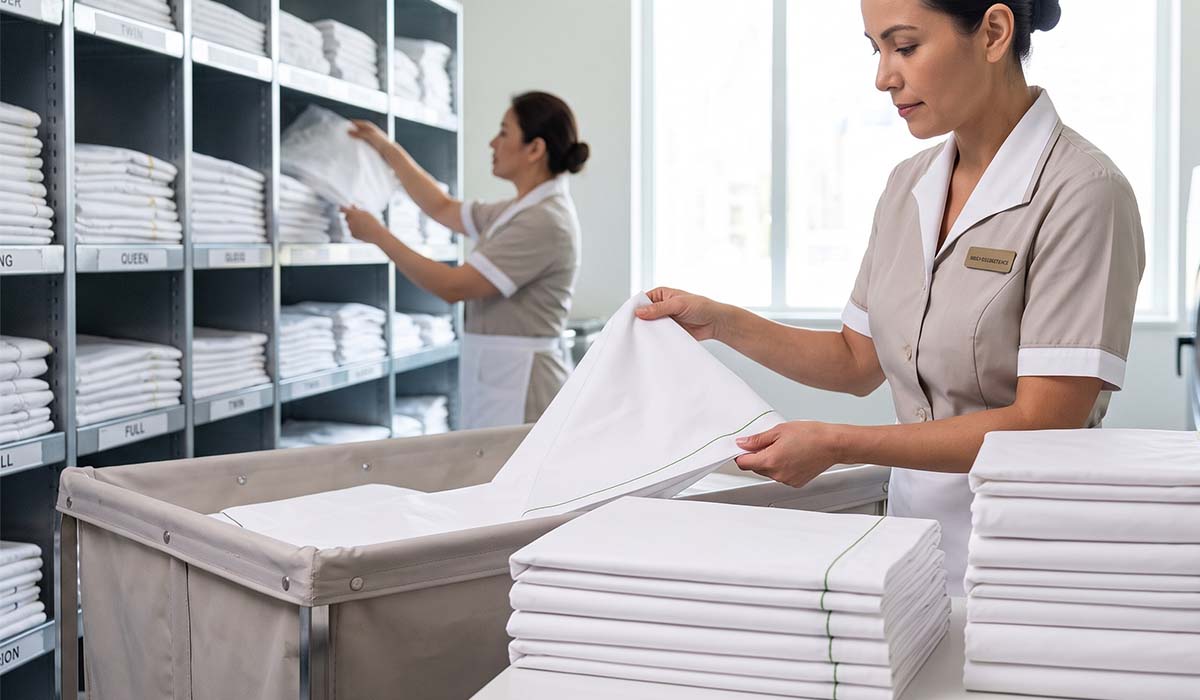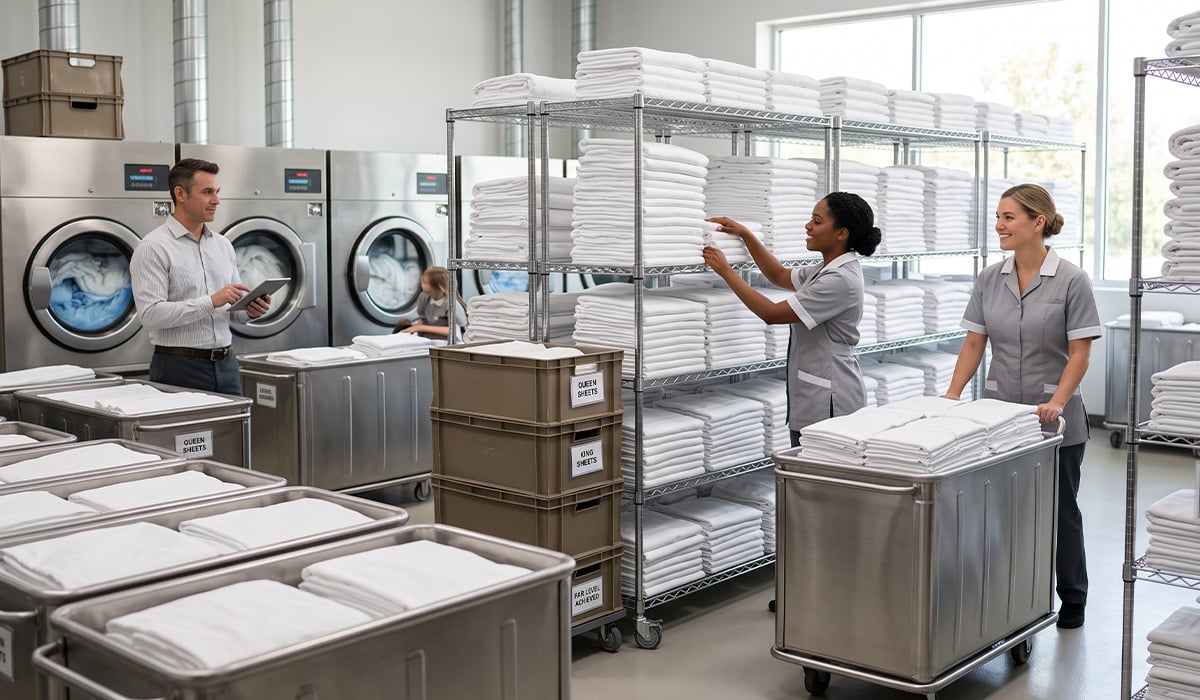
A hotel may appear fully stocked during normal occupancy, but when rooms fill up, laundry turnaround slows, damaged sheets increase, and housekeeping starts running short of clean bed linen.
The solution is not simply to order more sheets at the last minute. Hotels need to calculate par levels around peak demand, laundry turnaround time, linen loss, and a practical safety buffer.
For hotel managers and purchasing teams, the goal is simple: maintain enough bulk hotel bed sheets to keep rooms turning without tying up unnecessary money in excess inventory.
Table of Contents
What Is a Hotel Linen Par Level?
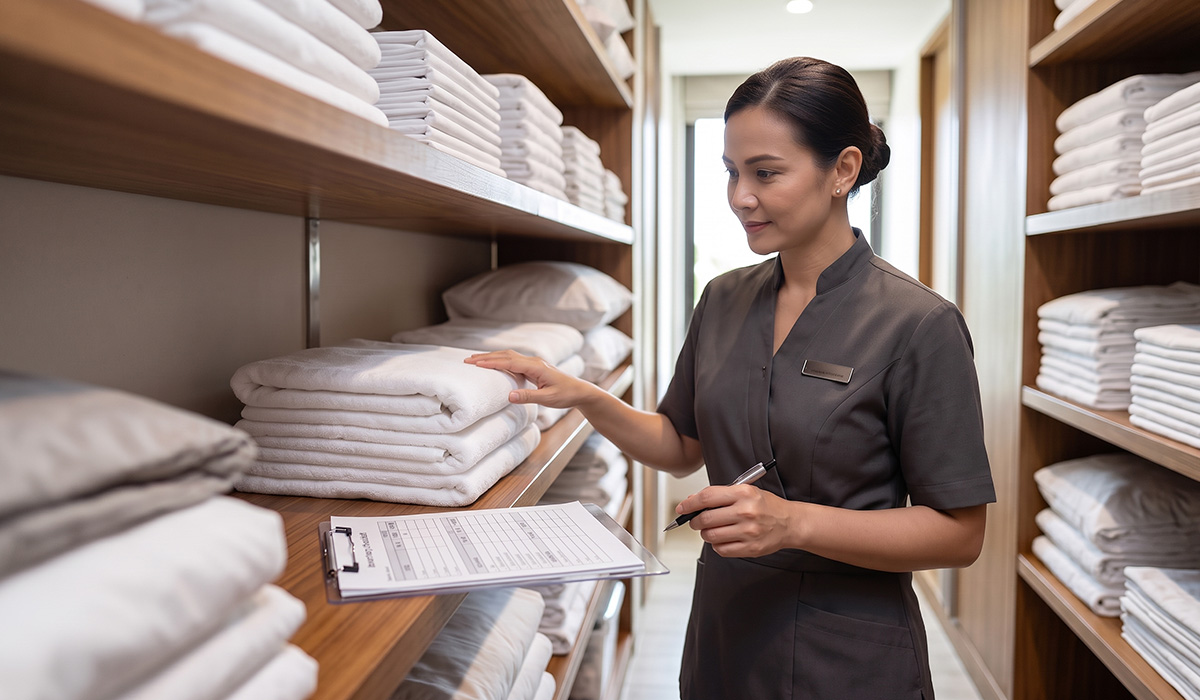
A hotel linen par level is the quantity of a particular linen item required to keep operations running through use, laundry, storage, and normal replacement needs.
A common starting point is a 3-par system:
| Par | Where the sheets are | Purpose |
| Par 1 | On beds / in rooms | Current room use |
| Par 2 | In laundry or processing | Covers the laundry cycle |
| Par 3 | Clean and available | Ready for room turnover |
However, three par is not a universal rule. Properties using off-site laundry, experiencing long laundry turnaround times, or facing sharp seasonal occupancy increases may need additional inventory.
Current hospitality guidance commonly places many hotel operations in the 3–5 par range, depending on laundry arrangements and operating conditions.
Why Do Hotels Face a Par Level Crisis During Peak Season?
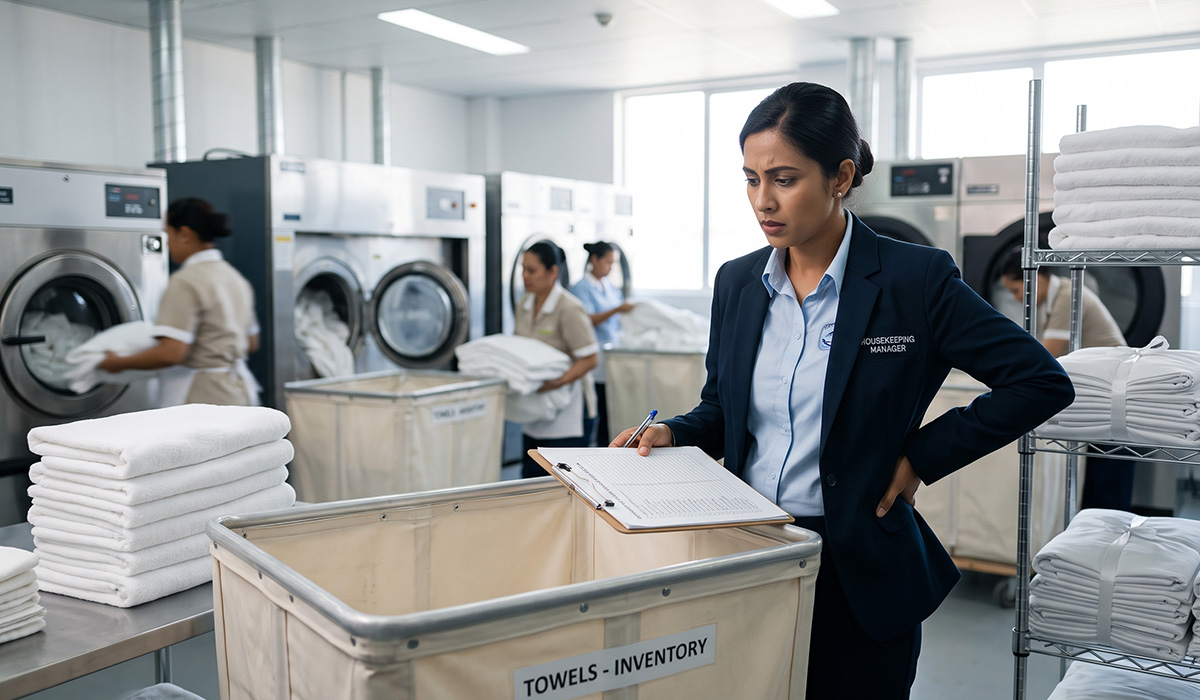
A par level crisis usually happens when actual linen demand exceeds the inventory and laundry capacity planned for normal operations.
Common causes include:
- Occupancy rising above the level used for inventory planning
- More frequent room changes
- Longer laundry turnaround time
- Off-site laundry delays
- Damaged or stained sheets being removed from circulation
- Lost or misplaced linen
- Insufficient clean reserve stock
- Ordering too close to the peak season
- Incorrect inventory counts
- Changes in room or bed configuration
One serious mistake is calculating linen requirements using average occupancy instead of peak occupancy. A hotel operating at moderate annual occupancy can still experience serious shortages during holiday periods, conferences, summer travel, or local events.
Learn More: Fitted Sheets Vs. Flat Sheets For Hotels: Which is Best?
How Many Pars of Bed Sheets Should a Hotel Keep?
There is no single par level that works for every hotel.
A practical starting point is 3 par for properties with reliable, fast laundry turnaround, while properties with longer or less predictable laundry cycles may require 4 or more.
The correct number depends on how quickly soiled sheets return to usable inventory and how much safety stock the property wants to maintain.
For example, a hotel should not treat these two operations as identical:
Hotel A: In-house laundry with same-day processing.
Hotel B: Off-site laundry with collection, processing, and delivery taking multiple days.
Hotel B has more linen tied up in the laundry cycle, so its required inventory can be higher.
Learn More: How To Find The Par Level for Hotel Linen?
Calculate Hotel Bed Sheet Par Levels by SKU
Do not calculate one general “sheet par.”
Calculate each major SKU separately:
- King fitted sheets
- Queen fitted sheets
- Full fitted sheets
- Twin fitted sheets
- King flat sheets
- Queen flat sheets
- Pillowcases
This matters because a surplus of queen sheets does nothing to solve a shortage of king sheets.
A simple starting formula is:
Required inventory = sheets needed per room × number of rooms × target par
For example, if 100 rooms require one specific fitted sheet per room and the property operates at 3 par:
100 rooms × 1 sheet × 3 par = 300 sheets
But this is only the starting point. Peak occupancy, laundry turnaround, damage, replacement, and safety stock should also be considered.
How to Fix a Hotel Linen Shortage Before Peak Season
If an inventory audit shows that your current par is too low, take action before occupancy reaches its peak.
-
Conduct a Physical Linen Audit
Count:
- Clean sheets in storage
- Sheets currently in rooms
- Sheets at the laundry
- Damaged or stained sheets
- Sheets awaiting inspection
- Emergency reserve stock
Do not count unusable sheets as available inventory.
-
Compare Inventory With Peak Demand
Review upcoming occupancy forecasts and identify your busiest dates.
Then compare projected sheet demand against usable inventory.
-
Check Laundry Turnaround Time
Measure the actual time between:
Room → Soiled collection → Laundry → Drying/finishing → Delivery → Linen room
The real turnaround time matters more than the promised turnaround time.
-
Establish Safety Stock
Peak-season inventory should include a buffer for unexpected problems such as:
- Laundry delays
- Equipment downtime
- Higher-than-expected occupancy
- Stained or damaged sheets
- Delivery delays
- Unexpected room turnover
The buffer should be based on the property’s own operating history rather than an arbitrary percentage.
Learn More: How Much Should Hotels Spend on Hotel Toiletries Per Guest?
-
Order Before the Crisis
Emergency purchasing creates unnecessary pressure on purchasing teams. It can also make it harder to maintain consistent specifications, sizes, colors, and quality.
For bulk hotel bed sheets, confirm availability, MOQ, lead time, and replenishment capacity before peak season begins.
Choosing Bulk Bed Sheets for Peak Season
Solving a par shortage is not just about buying more units. The replacement sheets need to work within the hotel’s existing bedding and laundry program.
Look for:
- Correct bed and mattress sizes
- Consistent sizing across replenishment orders
- Construction suitable for institutional laundering
- Durable stitching and hems
- Appropriate fabric blend or fiber content
- Reasonable drying requirements
- Consistent whiteness or color
- Reliable supplier availability
For example, DZEE’s Icon T-200 Percale Sheets uses a 60% combed cotton/40% polyester blend and is described as engineered for institutional laundering, with anti-pilling and crease-resistant finishing.
Its Swiss Stripe T-250 Sheets line also uses a 60% combed cotton/40% polyester construction and is described as engineered for institutional laundering, with a crease-resistant, anti-pilling finish.
For properties prioritizing a lightweight and fast-drying option, DZEE’s Opal Microfiber sheets are made from 100% polyester microfiber and are positioned around durability and operational convenience.
This gives purchasing teams different sheet constructions to consider rather than forcing every property into one specification.
DZEE Textiles for Bulk Hotel Bed Sheet Supply
DZEE Textiles is your one-stop shop for all wholesale hotel supplies, serving more than 10,000 customers in the United States. DZEE Textiles offers a broad range of wholesale hotel bed sheets, including cotton sheets, cotton-blend sheets, and microfiber sheet options for hospitality properties.

As a wholesale supplier of high-quality hotel supplies, we offer top-notch towels, bed linens, decorative bedding, hotel accessories, electrical appliances, cleaning supplies, and other hospitality items at wholesale prices, with free shipping on most orders.
With over 25 years of experience and distribution centers in Orlando, FL; Knoxville, TN; Dallas, TX; and Las Vegas, NV, we ensure quick distribution and unmatched service across the USA.
Final Words
For hotels preparing for peak occupancy, the key advantage is having multiple sheet constructions available so purchasing teams can match the product to their budget, guest experience, laundry operation, and expected room turnover.
Preparing for peak season? Review your current sheet par before occupancy rises. Explore DZEE Textiles’ wholesale hotel bed sheets or contact the team to discuss bulk quantities, sheet specifications, and replenishment needs.
Frequently Asked Questions
-
What causes a par level crisis for hotel bed sheets?
Common causes include peak occupancy, inadequate reserve stock, longer laundry turnaround, damaged sheets, inaccurate inventory counts, and purchasing too close to the busy season.
-
How many pars of bed sheets should a hotel keep?
Many hotels use 3 par as a starting point, while properties with longer laundry cycles, outsourced laundry, or significant seasonal demand may require 4 or more.
-
How can hotels prevent bed sheet shortages during peak season?
Audit usable inventory, calculate demand by sheet size, measure actual laundry turnaround, establish safety stock, and replenish well before peak occupancy.
-
Should hotel par levels be based on average occupancy?
No. For seasonal planning, par levels should be tested against expected peak demand rather than relying only on annual average occupancy.
-
Should hotels buy bulk bed sheets before peak season?
Yes, when the inventory audit shows a potential shortage. Advance purchasing gives procurement teams more time to confirm sizes, specifications, quantities, lead times, and supplier availability.
-
How does laundry turnaround affect linen par levels?
The longer sheets remain in washing, drying, finishing, storage, or transit, the more inventory the hotel needs to keep rooms supplied without interruption.