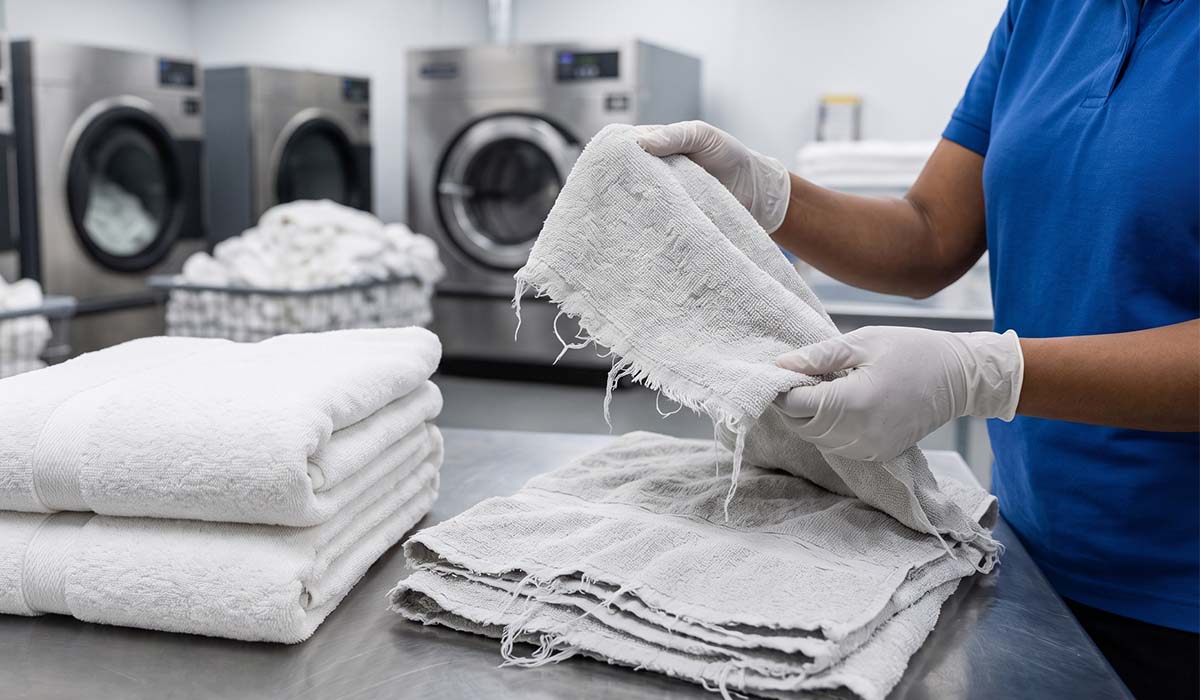
Commercial linens turn yellow and stiffen due to unrinsed chemical residue, hard water minerals, incorrect bleach dosing, and excessive drying heat.
Yellowing and stiffness are not always signs of poor-quality cotton. The factors listed above, along with unsuitable textile construction, contribute heavily to premature deterioration.
In this guide, you will learn the exact chemical causes of linen degradation, operational laundry fixes, and how to select bleach-resistant hospitality terry to lower your cost-per-use.
Table of Contents
Why Do Hotel Towels Turn Yellow in Industrial Laundries?
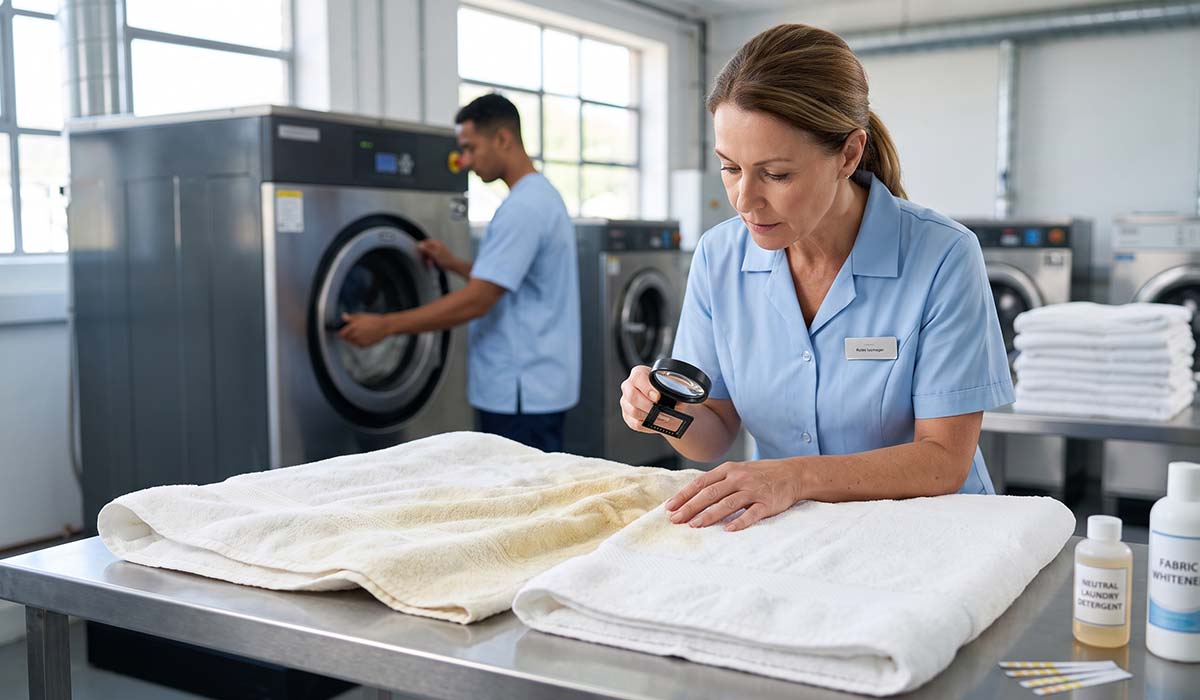
Bath towels turn yellow when chlorine bleach, trapped body oils, and chemical residues oxidize within the cotton fibers during repeated commercial wash cycles.
Persistent discoloration forces hotels to discard inventory that is otherwise structurally sound. The most common chemical and operational culprits include:
- Incomplete Soil Removal: Trapped body oils and lotions bake permanently into the fabric.
- Incorrect Chemical Dosing: Improper bleach concentrations chemically burn the optical brighteners.
- Chlorine Exposure: High chlorine levels from aggressive laundering or pool water degrade raw cotton.
- High-Temperature Processing: Extreme heat accelerates both fiber damage and stain discoloration.
For more insight into how premium linens resist this damage, review the secrets behind high-performance hotel towels.
Why Do Commercial Linens Become Stiff After Repeated Washing?
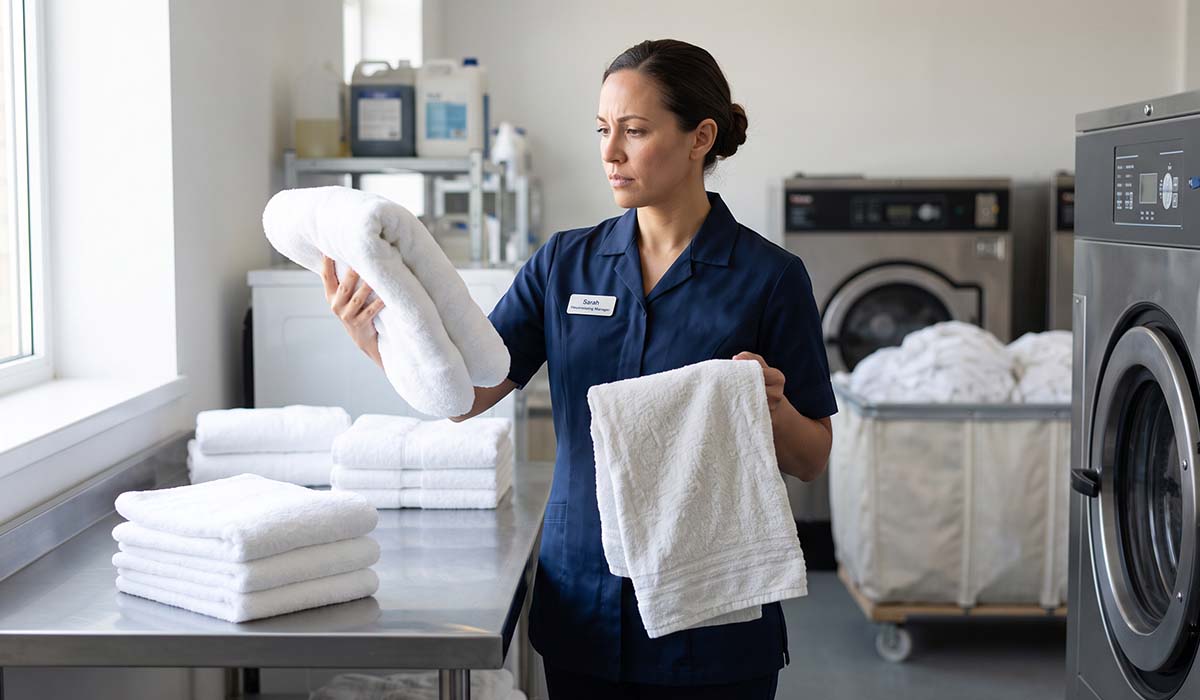
These textiles become stiff when hard water minerals and unrinsed alkaline detergents bake directly into the cotton fibers during high-heat drying.
Stiffness destroys guest comfort and signals a broken chemical wash process. The most common causes of stiff, scratchy terry include:
- Hard-water mineral buildup: Specifically, calcium and magnesium from water exceeding 3 grains per gallon (GPG).
- Incorrect detergent dosing: Leaving highly alkaline chemical residue in the fabric.
- Inadequate rinsing cycles: Failing to neutralize the pH level before extraction.
- Excessive drying temperatures: Exceeding the safe limit of 140°F–160°F (60°C–71°C).
- Overloading commercial machines: Restricting the water flow necessary for proper rinsing.
- Incorrect use of fabric softeners: Coating cotton fibers in water-repellent silicone.
Hotels looking to maximize their textile service life should review which hotel towels last longest in commercial laundry to understand key durability factors.
How Can Hotels Prevent Towels From Yellowing and Stiffening?
Hotels can prevent yellowing and stiffness by strictly controlling chemical dosing, water hardness, and commercial drying temperatures.
Adjusting your wash chemistry extends linen service life immediately. Implement these operational standards:
| Laundry Factor | What to Control | Operational Benefit |
| Chemical Dosing | Use exact bleach and detergent concentrations. | Prevents chemical fiber burn and color loss. |
| Water Quality | Soften water testing above 3 grains per gallon (GPG) / 50 PPM. | Stops calcium and iron from binding to cotton. |
| Wash Temperature | Follow specific care requirements for the fiber type. | Reduces thermal stress on cotton fibers. |
| Rinsing | Use a laundry sour to hit a neutralization target pH of 5.5 to 6.5. | Maintains natural cotton softness and absorbency. |
| Drying | Cap drying temperatures at 140°F–160°F (60°C–71°C). | Preserves fiber structure and prevents brittleness. |
| Load Size | Do not overload commercial machines. | Ensures proper water flow for chemical rinsing. |
Before purchasing new inventory, review the 5 essential things you should know before purchasing hotel towels for a complete commercial buying checklist.
How Should Hotels Choose Linens for Industrial Laundry Operations?
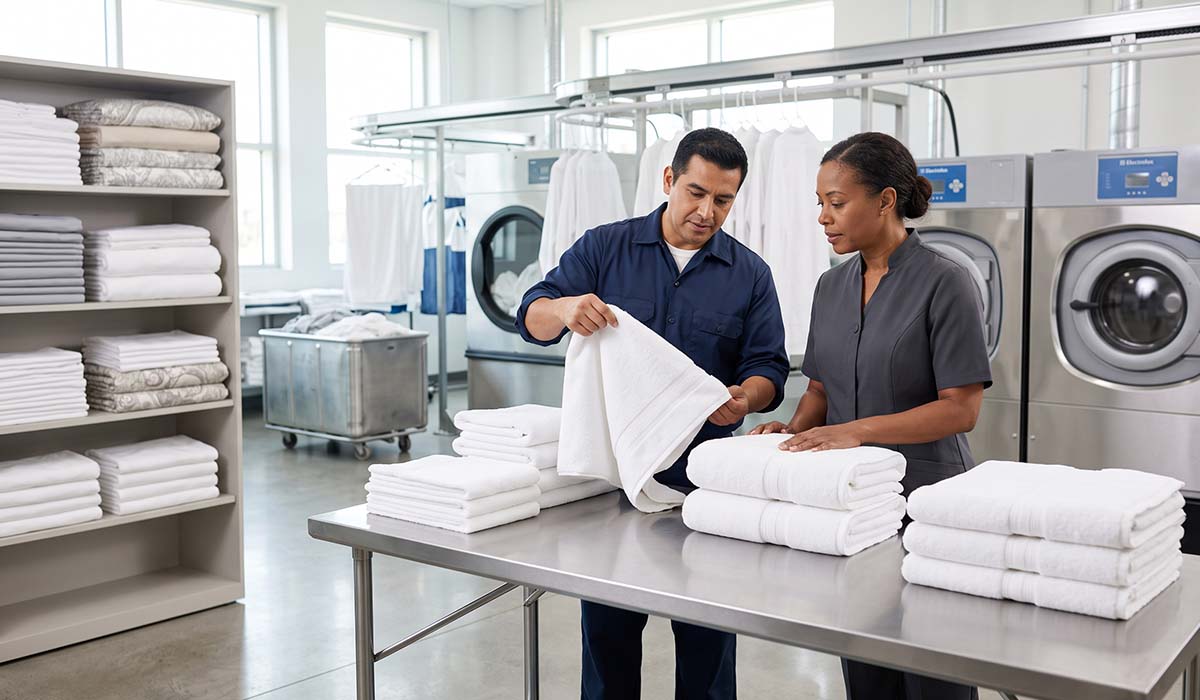
Hotels must choose commercial bath collections based on their specific wash chemistry, water hardness, and guest application.
- Choose the Appropriate GSM: High GSM offers luxury absorbency. Low GSM speeds up drying and laundry turnover.
- Evaluate Fiber Composition: 100% cotton delivers premium softness. Cotton-polyester blends offer faster drying and higher structural durability.
- Check Chemical Resistance: If your wash formula uses chlorine bleach, mandate bleach-resistant and chlorine-shield fibers.
- Examine Construction and Stitching: Demand double-needle stitching and commercial-grade hems to prevent fraying.
- Consider the Application: Bath, gym, and pool towels require different specs.
For specialized outdoor use, review our guide on selecting the perfect hotel beach towels for summer.
How Does DZEE Textiles Help Hotels Reduce Towel Damage From Commercial Laundering?
DZEE Textiles prevents chemical damage by engineering hospitality terry with long-staple cotton, advanced dyeing techniques, and double-needle stitching. For over two decades, more than 10,000 hospitality businesses have trusted our commercial textiles.
Our product lines are built specifically for aggressive hospitality laundry operations. For properties wanting aesthetic appeal without sacrificing durability, our wholesale colored towels deliver premium performance:
- Advanced Colorfastness: We utilize advanced dyeing techniques. This locks in color and prevents chemical stripping during harsh wash cycles..
- Premium Fiber Construction: The Mikado Castle Rock Gray collection uses 100% ring-spun cotton for maximum absorbency. The Belem Signature Shades utilize long-staple cotton in evening blue and sage green to completely prevent pilling.
- Commercial Durability: Double-needle stitching reinforces the hems. This allows our colored collections to withstand commercial laundering 3x better than standard retail options.
We offer multiple fiber compositions, GSM levels, and fast shipping from distribution centers in Florida, Tennessee, and Nevada
Frequently Asked Questions
-
How do you stop towels from turning yellow?
Stop towel yellowing by controlling bleach dosing, neutralizing wash pH, and softening hard water. Upgrading to bleach-resistant commercial towels also prevents permanent chemical discoloration.
-
Why do hospitality linens become stiff after washing?
They become stiff because unrinsed alkaline detergents and hard water minerals bake into the cotton during high-heat drying. Neutralizing the wash pH and capping drying temperatures at 160°F (71°C) fixes this instantly.
-
Does bleach damage towels?
Yes. Excessive chlorine bleach breaks down cotton cellulose, leading to brittleness and yellowing. Always follow strict chemical dosing guidelines for your specific towel construction.
-
What type of hotel towel is best for industrial laundry?
The best towels for industrial laundry feature commercial-grade ring-spun cotton, double-stitched hems, and chlorine-shield technology to withstand heavy chemical processing.
-
Are bleach-resistant towels better for commercial laundries?
Yes. Bleach-resistant towels maintain their structural integrity and colorfastness much longer when exposed to the aggressive chemicals used in commercial wash formulas.
-
How can hotels extend the life of their towels?
Hotels extend towel life by optimizing detergent dosing, keeping drying temperatures below 160°F, neutralizing water pH to 5.5–6.5, and purchasing textiles engineered specifically for commercial environments.
Final Thoughts
Preventing l towels from yellowing and stiffening requires a strict balance of precise wash chemistry and durable textile sourcing.
By combining bleach-resistant towels with optimized laundry practices, properties can eliminate premature degradation, improve consistency, and drastically lower their cost-per-use.